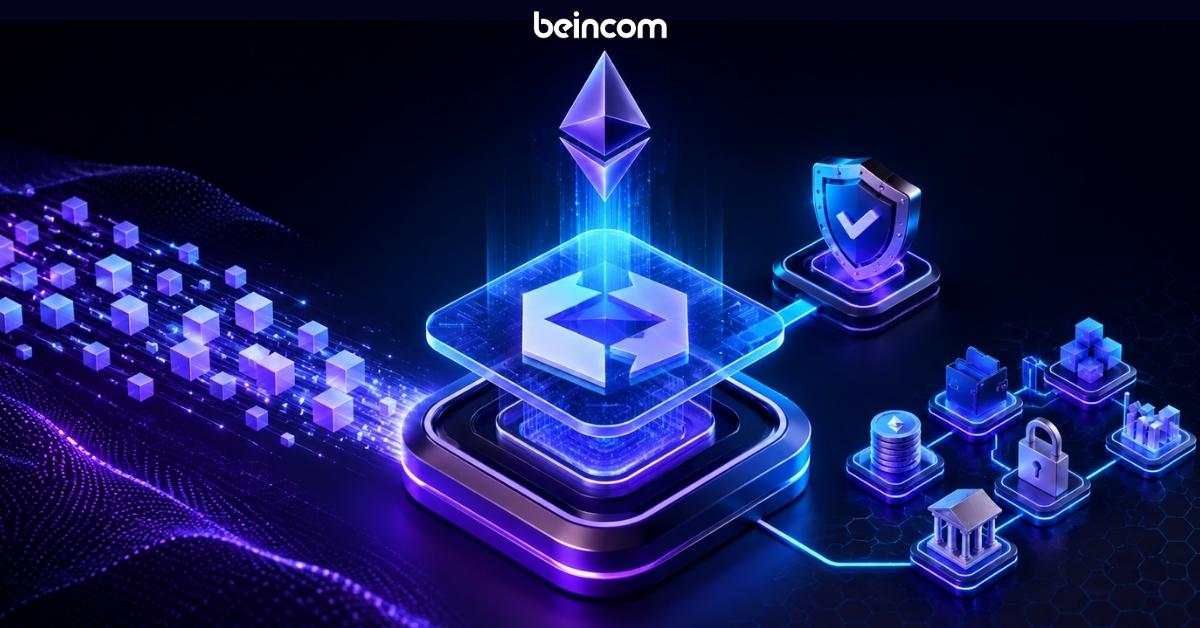
As blockchain adoption grows, networks like Ethereum continue to face major scalability challenges. During periods of high activity, users often experience slow transaction speeds and expensive gas fees, especially when using DeFi platforms, NFT marketplaces, or on-chain games.
To solve these problems, developers have created Layer 2 scaling solutions that process transactions more efficiently while still benefiting from Ethereum’s security. Among these solutions, zk-rollups have become one of the most important technologies in the blockchain industry.
zk-rollups are designed to increase transaction throughput, reduce fees, and improve the user experience without sacrificing decentralization or security. Today, many major crypto projects are investing heavily in zk-rollup technology as part of Ethereum’s long-term scaling roadmap.
What Is a zk-Rollup?
A zk-rollup is a Layer 2 scaling solution that helps blockchains like Ethereum process transactions faster and at lower cost.
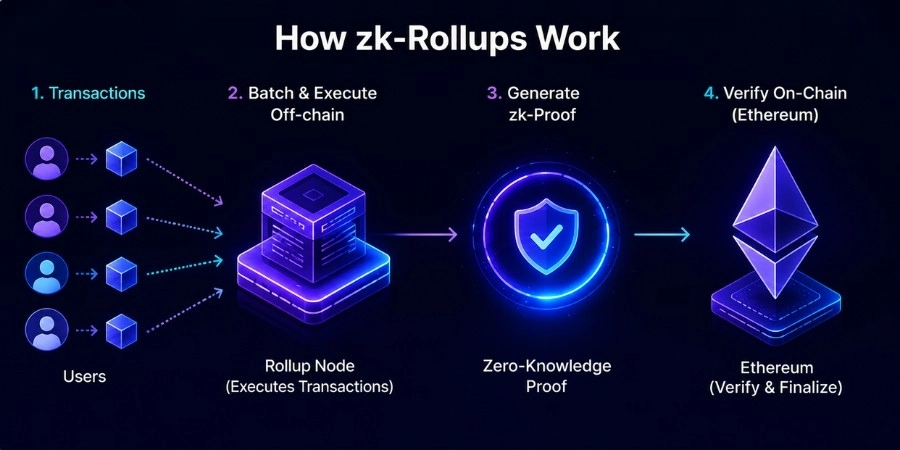
Instead of executing every transaction directly on Ethereum, zk rollups process transactions off-chain and bundle many transactions together into a single batch, often called a “rollup.” The system then submits a cryptographic proof to Ethereum to verify that all transactions in the batch are valid.
The “zk” in zk-rollup stands for zero-knowledge, which refers to a type of cryptographic proof known as a zero-knowledge proof. This proof allows the network to confirm that transactions are correct without revealing all underlying transaction data or requiring Ethereum to process every transaction individually.
In simple terms, they reduce the amount of work Ethereum needs to do while still maintaining Ethereum-level security.
You can think of it like compressing hundreds of transactions into a single verified summary before sending it to the Ethereum blockchain. This approach helps reduce congestion, improve scalability, and lower gas fees for users.
How Does a zk-Rollup Work?
zk-rollups improve scalability by moving most transaction processing away from the Ethereum mainnet while still relying on Ethereum for security and final verification.
Here’s how the process typically works:
Transactions Are Processed Off-Chain
When users send transactions on a zk rollup network, the transactions are executed off-chain instead of directly on Ethereum.
This significantly reduces the computational load placed on Ethereum itself.
Transactions Are Bundled Into a Rollup
Instead of sending every transaction individually to Ethereum, the zk-rollup groups hundreds or even thousands of transactions into a single batch.
This batching process is one of the main reasons zk-rollups can reduce gas fees so effectively. Multiple users share the cost of posting data to Ethereum rather than paying full fees individually.
A Zero-Knowledge Proof Is Generated
After processing the transactions, the zk rollup generates a cryptographic proof—commonly called a validity proof.
This proof mathematically confirms that all transactions inside the batch are valid and follow the network’s rules.
Two of the most common proof technologies used in zk-rollups are:
- zk-SNARKs
- zk-STARKs
These systems allow Ethereum to verify correctness without reprocessing every transaction itself.
Ethereum Verifies the Proof
The validity proof and compressed transaction data are then submitted to Ethereum.
Ethereum only needs to verify the proof rather than execute every transaction individually. Because verifying a proof is much cheaper than processing thousands of transactions separately, the network becomes significantly more scalable.
This approach allows zk-rollups to inherit much of Ethereum’s security while achieving:
- lower gas fees
- higher transaction throughput
- faster transaction finality
Some modern zk-rollup networks are capable of processing thousands of transactions per second under certain conditions, far beyond Ethereum’s base-layer capacity alone.
Benefits of zk-Rollups
zk-rollups have become one of the most important Layer 2 technologies because they solve several major problems facing Ethereum.
Lower Gas Fees
One of the biggest advantages is lower transaction costs.
Because many transactions are bundled together into a single batch, users share the cost of submitting data to Ethereum. This can significantly reduce gas fees compared to transacting directly on the Ethereum mainnet.
For DeFi traders, NFT users, and blockchain gamers, these savings can make on-chain activity much more practical.
Faster Transactions
zk-rollups can process transactions much faster than Ethereum Layer 1 alone.
Instead of waiting for every transaction to be executed directly on Ethereum, most computation happens off-chain. This improves throughput and creates a smoother user experience.
Ethereum-Level Security
Unlike some alternative blockchains that rely on separate security models, zk-rollups still inherit security from Ethereum.
The cryptographic validity proofs submitted to Ethereum help ensure that invalid transactions cannot be finalized.
This makes them attractive for applications handling large amounts of value, such as DeFi protocols and tokenized assets.
Better Scalability
Ethereum can only process a limited number of transactions per second on its base layer. zk-rollups help expand this capacity by moving most transaction execution off-chain.
As adoption grows, scalability becomes increasingly important for supporting mainstream blockchain applications.
Faster Finality Compared to Optimistic Rollups
zk-rollups generally offer faster transaction finality than optimistic rollups.
Optimistic rollups rely on a challenge period where transactions can be disputed, which may create withdrawal delays. In contrast, zk-rollups use mathematical proofs to confirm validity immediately after verification.
This can create a faster and more efficient user experience.
Limitations of zk-Rollups
Despite their advantages, zk rollups still face several technical and adoption challenges.
Complex Technology
zk-rollups rely on advanced cryptography and zero-knowledge proofs, which are highly complex to develop and maintain.
Building zk-compatible applications is often more difficult than developing on traditional Ethereum environments, especially for newer teams.
Expensive Proof Generation
While transaction costs for users are lower, generating zero-knowledge proofs can require significant computational power.
This process may increase infrastructure costs for operators and developers.
Limited EVM Compatibility
Some networks are not fully compatible with the Ethereum Virtual Machine (EVM).
This means developers may need to modify smart contracts before deploying applications on certain zk-rollup ecosystems. Although zkEVM technology has improved significantly, compatibility is still evolving.
Ecosystem Still Developing
Compared to Ethereum mainnet or some larger Layer 2 networks, many zk rollup ecosystems are still relatively early in development.
Some networks may have:
- fewer dApps
- lower liquidity
- smaller developer communities
- less mature infrastructure
However, this is gradually improving as adoption grows.
Potential Centralization Risks
Some projects still rely on centralized sequencers or limited validator structures to process transactions.
Although many projects plan to decentralize further over time, this remains an important consideration for users who prioritize decentralization.
zk-Rollup vs Optimistic Rollup
zk-rollups and optimistic rollups are the two dominant Layer 2 scaling approaches for Ethereum. Both aim to reduce congestion and lower gas fees, but they use different methods to verify transactions.
The biggest difference lies in how they prove transaction validity.
zk-rollups use validity proofs (zero-knowledge proofs) to mathematically prove that transactions are correct before they are finalized.
Optimistic rollups, on the other hand, assume transactions are valid by default and only check them if someone submits a fraud challenge.
Because of this difference, optimistic rollups usually require a challenge period that can delay withdrawals, while zk-rollups can often finalize transactions much faster.
| Feature | zk-Rollup | Optimistic Rollup |
|---|---|---|
| Verification method | Validity proof | Fraud proof |
| Transaction finality | Faster | Slower |
| Withdrawal speed | Usually faster | Often delayed |
| Technology complexity | More complex | Simpler |
| Gas efficiency | Generally better | Good, but less efficient |
| EVM compatibility | Improving rapidly | Usually easier |
Popular zk rollup projects include zkSync and Starknet, while major optimistic rollup networks include Arbitrum and Optimism.
Many developers believe they may become a key long-term scaling solution for Ethereum because of their strong security and scalability potential. However, optimistic rollups currently have broader adoption and ecosystem maturity.
Popular zk-Rollup Projects
Several major blockchain projects are actively building zk-rollup ecosystems to improve Ethereum scalability and user experience.
zkSync
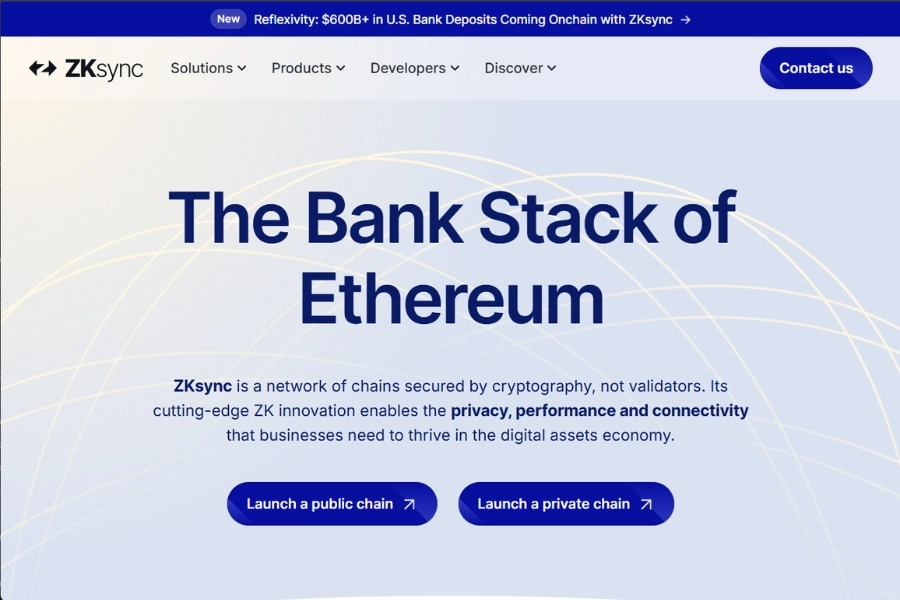
zkSync is one of the best-known zk-rollup projects and focuses heavily on scalability, low fees, and user-friendly payments.
Developed by Matter Labs, zkSync aims to provide a zkEVM-compatible environment that allows developers to deploy Ethereum applications with minimal changes. The network has become popular for DeFi, payments, and consumer-focused applications.
Starknet
Starknet is a zk-rollup network developed by StarkWare and is based on zk-STARK cryptographic proofs.
The project focuses strongly on scalability and advanced cryptography. Unlike some other zk-rollups, Starknet uses its own programming language called Cairo, which gives developers more flexibility but also creates a steeper learning curve.
Starknet is considered one of the most technically advanced zk ecosystems in the industry.
Polygon zkEVM
Polygon zkEVM is Polygon’s zk-rollup solution designed to be highly compatible with Ethereum smart contracts.
One of its main goals is to make it easy for existing Ethereum developers to migrate applications without major code changes. Because of this strong EVM compatibility, Polygon zkEVM has attracted significant attention from DeFi and Web3 developers.
Scroll
Scroll is another zkEVM-focused Layer 2 project aiming to provide an experience very close to Ethereum itself.
The project prioritizes compatibility, decentralization, and scalability. Scroll has gained popularity among developers because of its focus on maintaining a familiar Ethereum development environment while still benefiting from its efficiency.
These projects are part of a broader industry trend toward Ethereum scaling through zero-knowledge technology, an area many researchers believe could play a major role in the future of Web3 infrastructure.
Read more: Top Ethereum Layer 2 Projects: Faster, Cheaper & Smarter
Why zk-Rollups Matter for Ethereum
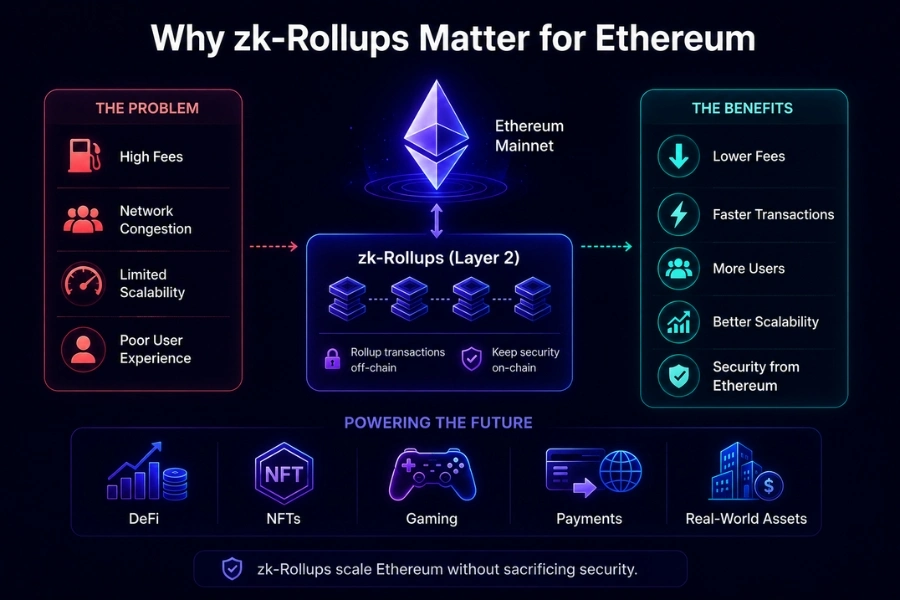
zk rollups are becoming increasingly important because Ethereum’s long-term success depends heavily on scalability.
As more users join DeFi, blockchain gaming, NFTs, social applications, and tokenized finance, the Ethereum mainnet alone cannot efficiently handle all transaction demand. High gas fees and network congestion have already become major barriers for mainstream adoption.
They help solve this problem by allowing Ethereum to process far more transactions without sacrificing security.
This is one reason why many developers and researchers believe zk-rollups could become a core part of Ethereum’s future scaling architecture. Even Ethereum co-founder Vitalik Buterin has frequently discussed the long-term potential of zero-knowledge technology.
They may also improve the user experience across many blockchain sectors, including:
- DeFi trading
- NFT marketplaces,
- Blockchain gaming
- Payments and remittances
- Tokenized real-world assets
Lower fees and faster transactions make blockchain applications more practical for everyday users rather than only advanced crypto participants.
As Layer 2 adoption continues to grow, they are likely to play an increasingly important role in making Ethereum more scalable, efficient, and accessible to mainstream users.
Conclusion
zk-rollups are one of the most promising Layer 2 scaling solutions in the blockchain industry. By processing transactions off-chain and verifying them through zero-knowledge proofs, zk rollups help reduce gas fees, improve scalability, and maintain the strong security of Ethereum.
Compared to traditional Layer 1 transactions, zk-rollups offer a much more efficient way to handle growing blockchain demand. They also provide faster finality and better scalability than many older scaling approaches.
Although the technology is still evolving, they are already being adopted by major projects such as zkSync, Starknet, and Polygon zkEVM.
As Ethereum continues scaling toward mass adoption, they are likely to become an increasingly important part of the future Web3 ecosystem.
FAQs
Q1. What is zk rollup in simple terms?
A zk-rollup is a Layer 2 technology that bundles many transactions together and verifies them using cryptographic proofs. This helps reduce gas fees and improve transaction speed on Ethereum.
Q2. Is zk-rollup better than optimistic rollup?
zk-rollups generally offer faster transaction finality and better scalability, while optimistic rollups are simpler and currently have broader ecosystem adoption. Each approach has different trade-offs.
Q3. Are zk-rollups secure?
Yes. zk-rollups inherit much of Ethereum’s security because transaction validity is verified on-chain using zero-knowledge proofs.
Q4. What are examples of zk-rollup projects?
Popular zk-rollup projects include zkSync, Starknet, Polygon zkEVM, and Scroll.
Q5. Do zk-rollups reduce gas fees?
Yes. zk-rollups reduce gas fees by batching many transactions together and sharing the cost of submitting data to Ethereum.