DeFi is transforming the financial landscape. If you’re curious about what is DeFi, how it works, and its potential, this guide covers everything from protocols to benefits, challenges, and how you can get involved. Let’s get started!
What is DeFi?
DeFi, short for Decentralized Finance, is a new way of handling money and financial services — without relying on banks or traditional financial institutions. Instead, it uses blockchain technology, mainly on Ethereum and similar platforms, to let anyone access tools like lending, borrowing, trading, and earning interest — all from their crypto wallet.
In simple terms, DeFi removes the middleman. No banks, no brokers — just smart contracts (self-executing code) running on a blockchain. You keep control of your assets, interact directly with protocols, and everything is open, transparent, and (mostly) permissionless.
At its core, DeFi is about giving people financial freedom — more control, more access, and more opportunity.
What Is The Difference Between CeFi and DeFi?
Different from DeFi, CeFi (Centralized Finance) relies on traditional financial institutions or centralized platforms (like banks or centralized crypto exchanges) to manage your funds. You trust a third party to hold your assets, process transactions, and provide services like lending or trading.
Here’s a simple comparison table between CeFi and DeFi:
| Aspect | CeFi (Centralized Finance) | DeFi (Decentralized Finance) |
| Control of Assets | The platform holds your assets. You trust the provider. | You hold your assets in a crypto wallet. |
| Intermediaries | Yes, centralized platforms or institutions involved. | No intermediaries; smart contracts manage everything. |
| Trust | You trust the platform or financial institution. | You trust the code and decentralized network. |
| Regulation | Often regulated by government authorities. | Less regulation or no centralized authority. |
| Transaction Speed | Can be slower due to intermediaries and approvals. | Typically faster due to direct peer-to-peer transactions. |
| Security | Security depends on the platform’s measures. | Security depends on the blockchain and smart contract code. |
| Access | Available for anyone with access to the platform. | Accessible for anyone with an internet connection and a wallet. |
| Examples | Binance, Coinbase, Kraken. | Uniswap, Aave, Compound, MakerDAO. |

Learn more: What Is a DAO? A Deep Dive into Decentralized Autonomous Organizations
How Does DeFi Work?
At its core, Decentralized Finance (DeFi) replaces traditional financial intermediaries — like banks, brokers, and payment processors — with blockchain-based protocols and smart contracts. This shift makes financial services more open, transparent, and accessible.
Blockchain and Smart Contracts
DeFi applications run on public blockchains such as Ethereum, BNB Chain, Polygon, and Solana. These blockchains act as decentralized networks that validate and store all transactions. No single entity controls the ledger — it’s maintained by a global network of nodes.
But the real engine of DeFi is the smart contract.
Smart contracts are self-executing programs written into the blockchain. They automatically enforce rules and carry out actions when specific conditions are met.
Unlike traditional systems that rely on trust and human oversight, DeFi relies on code. Once a smart contract is deployed, it runs exactly as programmed — no manual approvals, no third-party interference.
Example:
When you deposit crypto into a DeFi lending platform like Compound, a smart contract governs the entire process — from locking your funds and calculating interest to enabling someone else to borrow those funds and repay them. It all happens transparently, with no need for a loan officer or middleman.
DeFi Protocols
A DeFi protocol is a decentralized app (dApp) that offers financial services. These can range from decentralized exchanges (DEXs) and lending platforms to insurance protocols and yield aggregators.
Key traits of DeFi protocols include:
- Open-source: The code is visible and auditable by anyone.
- Permissionless: Anyone with an internet connection and a compatible wallet can participate — no paperwork required.
- Interoperable: Many DeFi protocols are composable, meaning they can be layered together to build more complex financial products. For instance, a user could borrow assets from one protocol and stake them in another to earn additional rewards.
This “money Lego” design opens up creative opportunities and has led to the rapid growth of the DeFi ecosystem.
Cryptocurrency
Cryptocurrency is the fuel that powers the entire DeFi system. Without it, none of these decentralized applications could function.
You use cryptocurrencies like ETH, DAI, and others to interact with DeFi protocols. They act as both the medium of exchange and the assets you lend, borrow, or stake. When you provide liquidity to a DEX, it’s in crypto. When you earn interest, it’s paid in crypto. Even transaction fees (called “gas”) are paid in crypto.
Unlike traditional currencies, these digital assets are programmable — meaning they can be embedded into smart contracts to execute actions automatically. They’re also borderless, censorship-resistant, and easy to transfer between protocols and wallets.
In short, cryptocurrency isn’t just a part of DeFi — it’s a requirement.
Crypto Wallets
To interact with a DeFi application, you don’t need a bank account — just a crypto wallet like MetaMask, Trust Wallet, or BIC Wallet. Your wallet acts as both your login and your bank account, enabling you to access DeFi platforms seamlessly. There are 2 types of crypto wallets:
Hot Wallets
Hot wallets are connected to the internet and come in the form of browser extensions or mobile apps. Examples include MetaMask and Trust Wallet. They’re convenient for daily transactions like lending, borrowing, trading, or staking directly from your wallet.
Because they’re always online, hot wallets are more vulnerable to security threats. However, they offer quick access and are user-friendly — ideal for active DeFi users.
Cold Wallets
Cold wallets store your crypto offline, using hardware devices (like Ledger or Trezor) or even paper wallets. They are best for long-term storage and offer strong protection against hacks, since they’re not connected to the internet.
With either wallet type, you maintain full control over your funds. No one can freeze your account, deny access based on location, or take your assets — unless you authorize it through a smart contract.
Lear more: Top 10 DeFi Platforms You Should Know
Benefits of DeFi
Why are so many people turning to decentralized finance? Here are the key reasons:
- Open access: Anyone with internet and a crypto wallet can use DeFi — no bank account or credit check needed.
- Full control over assets: You hold your own funds; no banks, no middlemen, no one can freeze or restrict your account.
- Transparent by design: All transactions and rules are written in smart contracts and visible on the blockchain.
- Lower fees and faster transactions: DeFi runs 24/7, and payments can process in seconds — often for a fraction of the cost.
- Earn while you hold: Lend your tokens, stake them, or provide liquidity to earn passive income without giving up ownership.
- Programmable finance: DeFi is customizable — smart contracts let developers build unique financial tools and services.
- Global access: Use stablecoins like USDC or DAI to save, trade, or send money across borders instantly and without conversion headaches.
DeFi Challenges
Decentralized Finance is full of potential — but it also comes with risks that you shouldn’t ignore. Here are the key challenges you need to know before diving in:
- Smart contract vulnerabilities: DeFi apps run on code, and if there’s a bug or loophole, hackers can exploit it. Once funds are stolen, there’s no “reverse” button.
- Regulatory uncertainty: DeFi operates across borders and often without clear legal frameworks. Changes in regulation can impact access, development, or even lead to platform shutdowns.
- Extreme volatility: Since DeFi is powered by cryptocurrencies, price swings can lead to unexpected liquidations or losses — especially when using collateralized loans.
- Rug pulls and scams: Anyone can launch a DeFi project. That freedom is exciting but also risky. Some platforms look legit but vanish overnight with users’ funds.
- Poor user experience: DeFi tools often have confusing interfaces, complex steps, and high fees (especially during network congestion). It’s still not beginner-friendly.
- Over-collateralization: To borrow in DeFi, you often need to deposit more than you’re taking out. This limits access and keeps DeFi mostly in the hands of existing crypto holders.
How to Get Involved in DeFi
Diving into decentralized finance might sound intimidating, but it’s more accessible than you think. Here’s how to get started with DeFi, step by step:
Set Up a Crypto Wallet
Start with a non-custodial wallet — one that gives you full control over your funds. Popular options include:
- MetaMask (browser extension + mobile)
- Trust Wallet (mobile)
- BIC Wallet (great for beginners & integrated with Web3 social features)
These wallets will store your private keys and let you interact directly with DeFi applications.
Buy or Transfer Cryptocurrency
To use DeFi apps, you’ll need crypto — usually ETH, BNB, MATIC, or stablecoins like USDC or DAI.
You can:
- Buy from centralized exchanges like Coinbase, Binance, or Kraken
- Transfer crypto from a friend or another wallet
Make sure to send your funds to your wallet’s correct network address.
Connect to a DeFi Platform
Once your wallet is funded, you’re ready to explore DeFi apps (also called dApps). Just visit the platform and connect your wallet. Popular DeFi protocols include:
- Uniswap (for swapping tokens)
- Aave (for lending/borrowing)
- Yearn Finance (for yield optimization)
- Curve Finance (for stablecoin trading)
Most dApps are super intuitive and guide you through the process.
Start Small and Explore
Try a few basic actions:
- Swap one token for another
- Lend a small amount of stablecoins
- Stake tokens in a pool
- Check your earnings over time
There’s no rush — DeFi is a playground, and you’re in control.
Stay Safe
- Only use trusted platforms with good reputations
- Never share your private keys or seed phrase
- Double-check URLs and avoid connecting to unknown sites
- Consider using a hardware wallet for larger amounts
Lear more: How to Invest in DeFi: A Full Guide for Beginners
DeFi Use Cases
DeFi isn’t just a buzzword — it’s already changing how people around the world access and use financial services. Here are some of the most common (and impactful) DeFi use cases today:
Lending and Borrowing
DeFi lending platforms like Aave, Compound, or Venus allow users to:
- Lend crypto and earn interest passively
- Borrow against their assets without needing a credit score
It’s fast, permissionless, and available 24/7 — no loan officers required.
Decentralized Exchanges (DEXs)
Platforms like Uniswap, SushiSwap, and PancakeSwap let users trade tokens directly from their wallets.
- No account needed
- No middlemen
- You stay in control of your assets at all times
Staking and Yield Farming
Many DeFi apps offer rewards for helping secure networks or provide liquidity.
Staking Crypto
Staking means locking your tokens into a blockchain protocol — usually one that uses a proof-of-stake (PoS) mechanism — to help validate transactions and secure the network. In return, you earn rewards over time, typically in the form of additional tokens.
Example:
- ETH holders can stake their tokens in Ethereum 2.0 and receive periodic rewards for supporting network operations.
- BIC Token holders can also participate in BIC Token Staking within the Beincom ecosystem. By locking their BIC assets, they receive passive rewards while supporting the network’s overall activity and stability.
Yield Farming
Yield farming involves providing your crypto assets to liquidity pools on decentralized exchanges or lending platforms. These pools enable others to borrow, lend, or trade crypto, and as a liquidity provider, you earn rewards — often through interest, a share of transaction fees, or bonus tokens.
It’s a popular strategy for maximizing returns in DeFi, especially for users willing to take on higher risks for potentially higher yields.
Stablecoins
Stablecoins like DAI, USDC, and USDT are key to DeFi. They:
- Reduce price volatility
- Serve as a safe unit of account
- Are used in trading, lending, and payments
Synthetic Assets and Derivatives
Platforms like Synthetix allow you to create and trade synthetic assets — crypto tokens that mirror the price of real-world assets like stocks or gold.
This opens access to markets that may be hard to reach in some countries.
Insurance
DeFi insurance protocols (e.g. Nexus Mutual) help protect users from things like:
- Smart contract failures
- Exchange hacks
- Protocol exploits
It’s decentralized risk-sharing, without a traditional insurance company.
Payments and Remittances
With DeFi apps and wallets, people can send money globally in seconds — no banks, no intermediaries, and with far lower fees than traditional remittance services.
NFTs in DeFi
Non-Fungible Tokens (NFTs) aren’t just for art and collectibles — they’re finding real utility in DeFi too. Here’s how NFTs are being used in decentralized finance:
- Collateral: Platforms like NFTfi or Arcade allow users to use valuable NFTs (like Bored Apes or CryptoPunks) as collateral for crypto loans.
- Tokenized ownership: Some DeFi protocols fractionalize NFTs, allowing multiple users to invest in high-value assets together.
- Yield-generating NFTs: Projects are creating NFTs that can earn yield or rewards — think of them like staking passes or utility NFTs.
- Access tokens: Some DeFi communities use NFTs to gate exclusive access to protocols, governance, or premium features.
In short, NFTs in DeFi are unlocking new possibilities for asset-backed lending, community engagement, and protocol innovation.
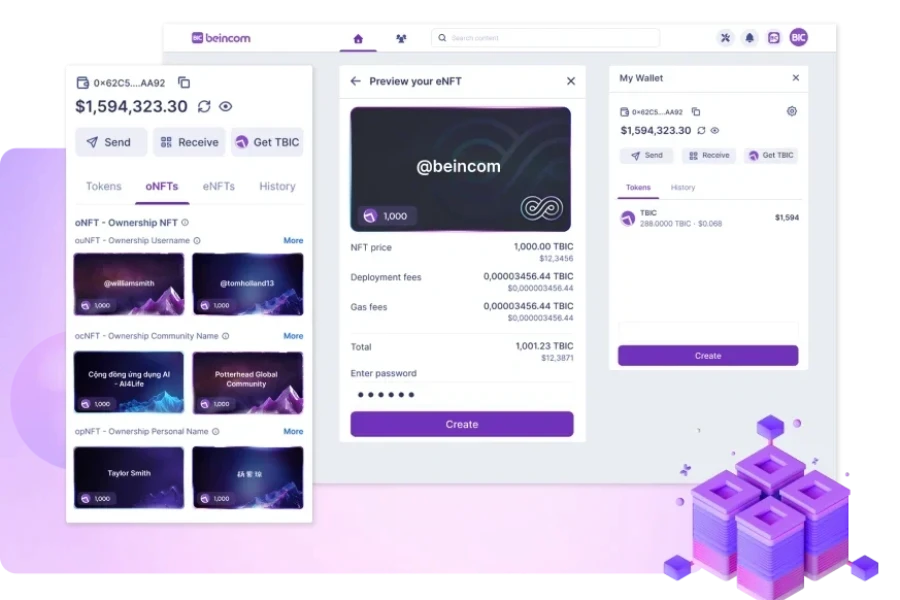
Want a smoother start to the seamless integration between SocialFi and DeFi? Sign up for Beincom — your all-in-one Web3 platform to connect, learn, and grow with others in the decentralized space. Whether you’re just starting or already deep into DeFi, Beincom makes your journey easier and more connected.
FAQs about DeFi
1. Can DeFi replace CeFi?
DeFi offers transparency and control over assets, but it faces challenges like scalability and regulation. CeFi is protected by established rules and offers more user-friendly experiences, making it more reliable for many users. DeFi may complement CeFi but is unlikely to fully replace it for now.
2. What are smart contracts in DeFi?
Smart contracts are self-executing agreements written into code that automatically enforce the terms when certain conditions are met. They operate without human intervention and ensure that transactions occur as programmed.
3. Can I make money with DeFi?
Yes, there are multiple ways to earn money in DeFi. These include lending your assets to earn interest, staking crypto to support network security, yield farming, and liquidity mining on decentralized exchanges (DEXs).
4. Do I need cryptocurrency to use DeFi?
Yes, since DeFi operates on blockchain technology, you’ll need cryptocurrency (typically Ethereum, Binance Coin, or stablecoins) to participate in the various DeFi applications.
5. How do I start using DeFi?
To get started, you’ll need a crypto wallet (like MetaMask or Trust Wallet), some crypto assets, and an internet connection. From there, you can explore different DeFi applications and begin lending, borrowing, or earning interest.
6. What is the future of Decentralized Finance?
The future of DeFi looks promising as it continues to expand, integrating more traditional financial products and services into decentralized networks. DeFi is expected to grow further as blockchain adoption increases and regulatory frameworks become clearer.