Real World Assets (RWA) have quickly become one of the most important narratives in crypto. As decentralized finance (DeFi) matures, the industry is no longer focused solely on native digital assets — it is increasingly bridging blockchain technology with tangible assets from the traditional financial world. From U.S. Treasury bills to real estate and private credit, tokenized RWAs are unlocking new sources of yield and bringing institutional-grade assets on-chain.
But what exactly are Real World Assets in crypto? How does tokenization work? And why are major financial institutions paying attention to this sector? In this comprehensive guide, you’ll learn what RWA means, how it functions within DeFi, its benefits and risks, and why many believe it could become a multi-trillion-dollar market in the coming years.
What Are Real World Assets (RWA)?
Real World Assets (RWA) refer to tangible or traditional financial assets that exist outside the blockchain but are brought on-chain through tokenization. In simple terms, RWA in crypto means representing ownership or exposure to physical or off-chain assets using blockchain-based tokens.
These assets can include:
- Real estate
- Government bonds (such as U.S. Treasuries)
- Corporate debt
- Commodities like gold
- Private credit and invoices
Unlike purely crypto-native assets such as ETH or governance tokens, RWAs derive their value from assets that already exist in the traditional financial system (TradFi).
The Core Idea Behind RWA
The goal of RWA tokenization is to combine the stability and scale of traditional assets with the efficiency and accessibility of blockchain infrastructure.
Instead of relying solely on crypto market cycles, DeFi protocols can generate yield from real-world cash flows — such as interest payments from bonds or loan repayments from borrowers. This creates a more sustainable model for decentralized finance, especially during periods of low on-chain speculation.
How RWA Differs from Traditional Investing
In traditional finance, investing in assets like bonds or private credit often requires:
- High minimum capital
- Geographic restrictions
- Institutional access
- Multiple intermediaries
With RWA tokenization, these assets can be:
- Fractionalized into smaller units
- Traded globally (subject to regulation)
- Settled faster on blockchain networks
- Integrated directly into DeFi protocols

How Real World Asset Tokenization Works
At its core, Real World Asset (RWA) tokenization is the process of converting ownership rights of an off-chain asset into a blockchain-based token. However, behind this simple definition lies a structured legal and technical framework that connects traditional finance with decentralized infrastructure.
To understand RWA properly, it’s important to break down how the process actually works.
Asset Selection and Structuring
The first step is identifying a real-world asset that can generate predictable value or cash flow. This could be:
- A government bond
- A commercial property
- A pool of private loans
- Gold reserves
- Invoice receivables
Once selected, the asset is typically placed into a legal entity, such as a Special Purpose Vehicle (SPV). This structure ensures that token holders have legally recognized claims or exposure to the underlying asset.
Without proper legal structuring, tokenization would have no enforceable value. This step is what differentiates serious RWA projects from purely experimental ones.
Custody and Asset Management
The physical or financial asset must be held by a trusted custodian or regulated institution. For example:
- Treasury bills may be held by a licensed asset manager
- Real estate is managed by property operators
- Commodities are stored with certified custodians
This layer introduces counterparty risk but is necessary because the asset exists off-chain. Transparency in custody arrangements is critical for investor trust.
Read more: Custodial vs Non-Custodial Wallets: What Should You Choose?
Token Issuance on Blockchain
After legal structuring and custody are established, blockchain tokens are issued to represent ownership or economic rights tied to the asset.
These tokens may represent:
- Direct ownership shares
- Revenue rights
- Debt claims
- Yield-bearing instruments
Smart contracts automate:
- Distribution of interest or rental income
- Redemption mechanisms
- Compliance rules (such as KYC restrictions)
This is where blockchain adds efficiency — reducing settlement time, automating payments, and enabling programmable financial logic.
On-Chain Integration and Liquidity
Once issued, RWA tokens can be integrated into DeFi ecosystems. They may be:
- Used as collateral
- Traded on secondary markets
- Deposited into yield strategies
- Paired with stablecoins for liquidity
Tokenization allows traditionally illiquid assets to become more accessible and potentially more liquid, depending on regulatory constraints.
In essence, RWA tokenization creates a bridge: the asset remains off-chain, but its economic value becomes programmable on-chain.
Types of Real World Assets (RWA) in Crypto
Real World Assets in crypto are not limited to one category. In fact, the RWA sector spans multiple asset classes from traditional finance. Each type serves a different purpose within DeFi — some focus on yield generation, while others emphasize stability or diversification.
Below are the most important categories shaping the RWA narrative today.
Tokenized Real Estate
Real estate was one of the earliest use cases for tokenization.
Instead of purchasing an entire property, investors can buy fractional ownership through blockchain-based tokens. These tokens may represent:
- Equity in residential or commercial properties
- Revenue rights from rental income
- Shares in real estate funds
The key advantage is accessibility. Real estate traditionally requires large capital and involves complex paperwork. Tokenization lowers entry barriers and enables global participation, although regulatory compliance still applies.
However, liquidity depends heavily on the platform and secondary market availability. Real estate remains fundamentally illiquid, even when tokenized.
Tokenized Bonds and U.S. Treasuries
One of the fastest-growing RWA categories is tokenized government bonds, especially U.S. Treasury bills.
These assets are attractive because they offer:
- Relatively low risk
- Predictable yield
- Strong institutional credibility
By bringing Treasuries on-chain, protocols allow crypto users to earn yield backed by traditional government debt rather than relying solely on speculative DeFi returns.
This segment has grown rapidly because it combines stability with blockchain efficiency — particularly during periods when crypto-native yields decline.
Learn more: Tokenized Equities: How Traditional Stocks Moving On-Chain
Commodities (Gold and Other Assets)
Commodities like gold are another popular RWA category.
Tokenized gold allows users to gain exposure to physical gold reserves without holding or storing the metal themselves. Each token typically represents a specific quantity of gold held in custody.
The appeal lies in:
- Inflation hedge characteristics
- Portfolio diversification
- 24/7 blockchain-based transferability
However, trust in the custodian and transparency of reserves remain critical.
Private Credit and Invoice Financing
Private credit is one of the most important and rapidly expanding RWA sectors.
In this model:
- Capital from DeFi investors funds real-world borrowers
- Borrowers repay with interest
- Yield flows back to token holders
This structure allows blockchain capital to finance small businesses, trade operations, or institutional borrowers.
Compared to speculative crypto yields, private credit is tied to real economic activity — making it more sustainable in theory. However, it also introduces credit risk and default risk, which must be carefully assessed.
Stablecoins as Real World Assets
Stablecoins backed by fiat reserves or government bonds are technically one of the largest RWA categories in crypto.
When a stablecoin is backed by:
- Cash reserves
- Treasury bills
- Money market instruments
It represents tokenized exposure to real-world financial assets.
Because stablecoins are deeply integrated into DeFi, they serve as foundational infrastructure for the broader RWA ecosystem.
Together, these categories demonstrate that Real World Assets are not a niche experiment — they represent a structural shift in how traditional finance can interact with blockchain networks.

Why Real World Assets (RWA) Are Becoming a Major Trend in Crypto
The rise of Real World Assets is not accidental. It reflects a structural shift in how the crypto industry is evolving. After multiple market cycles driven primarily by speculation, DeFi is increasingly focused on sustainability, real yield, and institutional credibility.
RWA sits at the center of that transition.
Demand for Real Yield
During previous bull markets, many DeFi protocols offered high yields funded by token incentives or speculative activity. When market conditions tightened, those yields often collapsed.
RWA changes that dynamic.
Instead of relying on inflationary token rewards, RWA protocols generate yield from real-world cash flows — such as:
- Interest payments from Treasury bills
- Loan repayments from private borrowers
- Rental income from properties
This model introduces a more fundamental source of return, anchored in traditional financial activity rather than purely crypto-native speculation.
Institutional Capital Entering Crypto
Large financial institutions are far more comfortable with familiar assets like bonds and credit markets than volatile crypto tokens.
Tokenized RWAs provide a bridge:
- Institutions can issue or manage regulated financial products on blockchain rails
- Crypto-native investors gain exposure to institutional-grade assets
- Settlement becomes faster and more transparent
As regulatory clarity improves, tokenization offers institutions a compliant pathway into blockchain infrastructure.
Expanding DeFi Beyond Crypto-Native Assets
Traditional DeFi primarily revolves around crypto collateral such as ETH or stablecoins. This creates systemic risk when markets decline, because everything is correlated.
RWAs diversify the ecosystem.
By integrating assets tied to real economic activity, DeFi becomes less dependent on crypto market cycles alone. That diversification can improve long-term resilience and stability.
Massive Market Size Potential
The total value of global financial assets — including bonds, real estate, and private credit — reaches into the hundreds of trillions of dollars.
Even a small percentage of those assets being tokenized represents enormous growth potential for blockchain networks.
Compared to the size of traditional markets, the current RWA sector is still in its early stages. That asymmetry is one reason many analysts view RWA as one of the most important long-term crypto narratives.
Real World Assets are not just another trend — they represent a structural convergence between traditional finance and decentralized infrastructure.
Benefits of Real World Assets (RWA)
Real World Assets are gaining traction not just because they are innovative, but because they solve real structural limitations in both traditional finance and DeFi. By combining off-chain value with on-chain infrastructure, RWAs introduce practical advantages that extend beyond speculation.
Below are the most important benefits driving adoption.
Greater Accessibility
Traditional financial products often have high entry barriers. Investing in private credit, real estate funds, or government bonds may require:
- Large minimum capital
- Accredited investor status
- Geographic restrictions
- Multiple intermediaries
Through tokenization, RWAs can be fractionalized into smaller units. This lowers capital requirements and makes certain asset classes more accessible to a broader range of participants, depending on regulatory frameworks.
Blockchain infrastructure also allows 24/7 settlement, reducing friction compared to traditional market hours.
Improved Liquidity (In Some Cases)
Many real-world assets are inherently illiquid. Selling a property or exiting a private loan position can take weeks or months.
Tokenization introduces the possibility of secondary markets where ownership tokens can be transferred more efficiently. While liquidity ultimately depends on demand and regulatory constraints, blockchain rails make peer-to-peer transfer and settlement significantly faster.
This does not eliminate illiquidity risk — but it can reduce settlement friction.
Transparent and Programmable Cash Flows
Smart contracts enable automated distribution of yield.
For example:
- Interest payments from bonds can be distributed automatically
- Loan repayments can be routed proportionally to token holders
- Compliance rules can be embedded directly into contract logic
This programmability increases operational efficiency and reduces reliance on manual processing.
On-chain transparency also allows investors to verify token supply, transaction history, and distribution mechanics in real time.
Portfolio Diversification for DeFi
DeFi has historically been highly correlated with crypto market cycles. When crypto prices fall, collateral values drop and yields decline.
RWAs introduce exposure to assets tied to real economic activity. Government bonds, private loans, and commodities behave differently from crypto-native tokens. This can improve risk diversification within on-chain portfolios.
Bridging TradFi and DeFi
Perhaps the most important benefit is strategic: RWAs create a bridge between traditional finance (TradFi) and decentralized finance (DeFi).
They allow:
- Traditional institutions to leverage blockchain efficiency
- Crypto protocols to tap into real-world yield
- Investors to gain hybrid exposure across both ecosystems
This convergence may be essential for crypto’s long-term integration into the global financial system.
Risks and Challenges of Real World Assets (RWA)
While Real World Assets offer significant potential, they also introduce a unique set of risks. Unlike purely crypto-native protocols, RWAs depend on both on-chain infrastructure and off-chain legal and financial systems. This hybrid structure creates additional layers of complexity that investors must understand.
Regulatory Risk
RWA projects often involve securities, debt instruments, or regulated financial products. This means they may fall under existing financial laws in multiple jurisdictions.
Unclear or evolving regulations can:
- Restrict who is allowed to invest
- Limit cross-border participation
- Require licensing and compliance frameworks
- Impact secondary market trading
Regulatory uncertainty remains one of the biggest variables for the long-term growth of tokenized assets.
Counterparty and Custody Risk
Because RWAs exist off-chain, they require trusted custodians, asset managers, or legal entities to hold and manage the underlying assets.
This introduces counterparty risk.
If a custodian fails, mismanages funds, or lacks transparency, token holders may be exposed to losses — even if the smart contract functions perfectly. Unlike fully on-chain assets, RWA value ultimately depends on real-world enforcement and trust structures.
Legal Enforceability
Owning a token that represents a real-world asset does not automatically guarantee enforceable rights.
The strength of investor protection depends on:
- Legal documentation
- Jurisdiction of incorporation
- Structure of the Special Purpose Vehicle (SPV)
- Clarity of ownership claims
Without strong legal frameworks, token holders may face difficulties asserting claims over underlying assets.
Credit and Default Risk
In sectors such as private credit or invoice financing, returns depend on borrowers repaying their loans.
If borrowers default, yield projections can decline significantly. Unlike government bonds, private lending carries meaningful credit risk, particularly during economic downturns.
Investors must evaluate:
- Borrower quality
- Collateral backing
- Risk management practices of the issuing protocol
Smart Contract and Technical Risk
Although RWAs connect to off-chain assets, the tokens themselves operate via smart contracts.
Smart contract vulnerabilities, oracle failures, or technical exploits can disrupt:
- Yield distribution
- Redemption mechanisms
- Token transfers
Even well-audited protocols are not immune to technical risk.
Liquidity Risk
Tokenization does not automatically guarantee deep liquidity. Secondary markets for RWAs may be limited, especially if regulatory constraints restrict participation.
In stressed market conditions, investors may struggle to exit positions quickly.
Real World Assets combine the risks of traditional finance with the technical risks of blockchain systems. While the opportunity is significant, due diligence is critical.
Top Real World Asset (RWA) Projects
The RWA sector has evolved quickly, with several protocols leading the integration of traditional financial assets into blockchain ecosystems. Below are some of the most prominent and credible projects shaping the Real World Assets narrative today.
MakerDAO (Now Sky) and Tokenized Treasuries
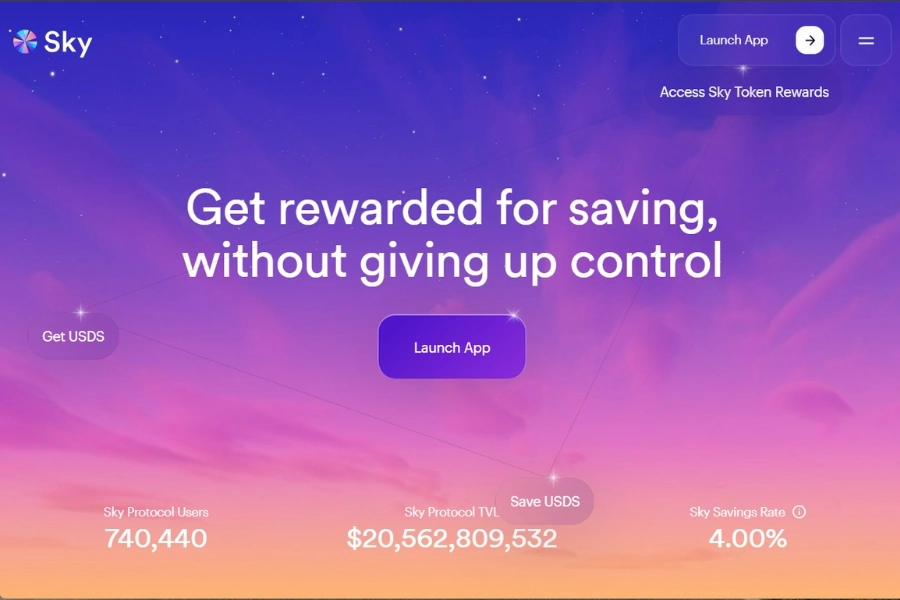
MakerDAO, recently rebranded under the Sky ecosystem, was one of the earliest DeFi protocols to integrate Real World Assets at scale.
Originally known for issuing the DAI stablecoin, MakerDAO began allocating part of its collateral into real-world instruments such as U.S. Treasury bonds. This move significantly strengthened DAI’s backing by introducing yield-generating traditional assets into its balance sheet.
By allocating billions of dollars into short-term government bonds through regulated asset managers, Maker demonstrated that RWAs could operate at institutional scale within DeFi.
Ondo Finance
Ondo Finance focuses heavily on tokenized U.S. Treasuries and institutional-grade financial products.
Ondo structures blockchain-based tokens that provide exposure to short-term U.S. government bonds and money market instruments. These products are designed to offer stable, regulated yield while leveraging blockchain settlement efficiency.
Ondo has gained attention for bridging institutional asset management with on-chain accessibility, particularly in the tokenized Treasury segment.
Centrifuge
Centrifuge specializes in tokenizing private credit and real-world receivables.
Through its infrastructure, businesses can tokenize invoices or real-world loan agreements and access liquidity from DeFi capital pools. Investors earn yield backed by real economic activity rather than speculative crypto trading.
Centrifuge has collaborated with major DeFi protocols to integrate real-world credit markets into on-chain lending ecosystems.
Maple Finance
Maple Finance focuses on institutional and undercollateralized lending within crypto, increasingly incorporating real-world borrower exposure.
Maple connects capital providers with vetted institutional borrowers, blending elements of traditional credit markets with blockchain-based lending infrastructure.
While originally focused on crypto-native borrowers, the protocol has expanded its scope to include more structured credit opportunities aligned with the RWA thesis.
Securitize
Securitize operates as a regulated digital securities platform that enables tokenization of traditional financial assets.
Unlike purely DeFi-native projects, Securitize works closely with regulatory frameworks to issue compliant tokenized securities, including funds and private equity instruments.
Its model highlights how RWA tokenization can function within existing financial law rather than outside of it.
These projects demonstrate that Real World Assets are no longer theoretical. They are already operating across multiple segments — from government bonds to private credit — and attracting both crypto-native and institutional capital.