Staking crypto is one of the simplest ways to earn passive income while supporting your favorite blockchain networks. In this guide, you’ll learn what crypto staking is, how it works, the different types, and why BIC Staking might be the perfect way to get started.
What is Crypto Staking?
Staking crypto is a way to earn passive income by participating in the operation of a blockchain network — and it’s changing how people grow wealth in Web3.
At its core, crypto staking involves locking up your cryptocurrency in a blockchain protocol to support the network’s operations — like validating transactions and securing the chain. In return for helping secure the network, you earn rewards, typically in the form of more tokens.
Think of it as earning interest on money in a high-yield savings account — but instead of a bank, you’re helping run a decentralized, trustless system. And instead of getting a flat interest rate, your earnings depend on how much you stake, the network rules, and how long you’re in the game.
Some well-known blockchains that use staking include Ethereum (post-merge), Cardano, Solana, Avalanche, and Polkadot.
So whether you’re here to support decentralization, earn passive rewards, or both — staking could be your gateway into a more active crypto life.

How Does Staking Crypto Work?
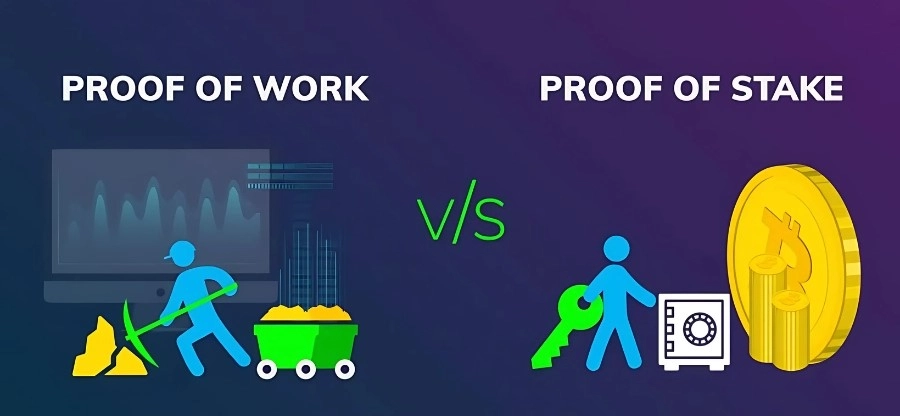
Crypto staking works through blockchain networks that use a Proof of Stake (PoS) consensus mechanism. Instead of relying on energy-intensive mining like Proof of Work (PoW), PoS allows participants (known as validators or delegators) to lock up tokens as a way to help validate transactions and maintain network integrity.
Here’s how the process works in simple terms:
- You stake your crypto by locking it in a staking wallet or through a staking platform (like a crypto exchange or DeFi protocol).
- The network uses your staked tokens as part of the consensus process to validate new transactions and add them to the blockchain.
- You earn rewards (usually in the form of more crypto) based on the amount you’ve staked, how long you stake, and the rules of the network.
Some blockchains require you to run a validator node, while others let you delegate your tokens to an existing validator—meaning you can still earn rewards without the technical complexity.
One of the key benefits of staking is that your tokens remain yours—they’re just locked for a certain period. During this time, you usually can’t transfer or sell them unless the network supports liquid staking (more on that later).
If you’re staking through a centralized exchange or DeFi platform, much of the process is simplified. They take care of the technical side and share a portion of the staking rewards with you.
In short, crypto staking helps blockchains run smoothly and rewards you for being part of the system.
What Is Proof of Stake?
To truly understand the crypto staking mechanism, we need to look under the hood—and that’s where Proof of Stake (PoS) comes in. It’s the engine that makes crypto staking possible.
In general, Proof of Stake is a consensus mechanism used by many blockchains (like Ethereum, Cardano, and Solana) to validate transactions and secure the network. Instead of relying on powerful computers solving complex puzzles (as in PoW), PoS lets participants “stake” their crypto to help validate transactions.
When you stake your tokens, you’re essentially locking them up to support the network. In return, you earn rewards. The more you stake, the higher your chance of being selected as a validator and receiving rewards—kind of like a lottery, but weighted by how much you’ve staked.
This method is energy-efficient, secure, and decentralized, making it a favorite among next-gen blockchain platforms.
Delegated Proof of Stake (DPoS)
Delegated Proof of Stake (DPoS) is a faster, more democratic twist on traditional Proof of Stake.
Instead of every user staking and validating transactions themselves (like in standard PoS), DPoS allows token holders to vote for a limited number of trusted validators—often called delegates, witnesses, or block producers, depending on the network.
Here’s how it works:
- You delegate your staking power by voting for validators with your tokens (you don’t lose ownership of the tokens—you’re just assigning your vote).
- A fixed number of top-ranked validators (e.g., 21 in EOS, 101 in TRON) are elected to maintain the blockchain.
- These validators take turns producing blocks in a predetermined, rotating schedule—this makes the network faster and more energy-efficient than standard PoS.
- Selected validators earn rewards for their work (from transaction fees or newly minted tokens).
- Rewards are shared with the users who delegate their stake to them, minus a validator’s commission fee.
Example:
Let’s say a validator earns 10 tokens for creating a block and charges a 20% fee. They would keep 2 tokens and distribute the remaining 8 tokens proportionally among the users who voted for them. So if you contributed 10% of the total delegated stake, you’d receive 0.8 tokens.
This model is used in popular networks like EOS, TRON, Lisk, and Steem, and it encourages community participation while keeping the number of active validators small and manageable—perfect for scalability and efficiency.
What Are Slashing Penalties in Staking?
Staking crypto can be profitable—but it’s not without responsibility. If a validator behaves maliciously or even just goes offline for too long, they can be penalized through slashing. This means a portion of the staked crypto is destroyed or “slashed.”
Slashing helps keep validators honest and ensures the blockchain remains secure. If you’re staking crypto through a validator or pool, it’s crucial to choose one with a solid track record and reliable uptime.
Typical Types of Crypto Staking (with Examples)
Staking isn’t one-size-fits-all. As the crypto space evolves, so do the ways users can stake their assets. Here are the most common types of crypto staking, each with its own mechanisms, pros, and risks.
Solo or Self-Staking
This is the most traditional (and technical) form of staking—running your own validator node and staking your own assets.
- Best for: Advanced users with technical knowledge, time, and enough capital.
- Example: To solo stake ETH on Ethereum 2.0, you need at least 32 ETH and a reliable setup to run a validator node continuously.
Delegated Staking
As explained above in Delegated Proof of Stake (DPoS), delegated staking allows you to assign your voting power to a trusted validator without running a node yourself.
- Best for: Users who want staking rewards but don’t want the technical burden.
- Example: In TRON, users vote for Super Representatives who validate blocks. In return, voters earn rewards proportional to their staked TRX.
Liquid Staking
Unlike standard staking, where the cryptocurrencies are locked for a period of time, the liquid staking lets you stake your assets while still being able to access their value through a ‘liquid token’ (also called staked token). You can trade, lend, or use them in DeFi protocols.
- Best for: Users who want to stake but also keep liquidity and flexibility.
- Example: Lido Finance allows you to stake ETH and receive stETH, which can be traded or used across DeFi apps even while your original ETH is locked.
Pooled Staking
Also known as staking pools, this method allows users to combine their assets to increase their chances of being selected to validate transactions. Rewards are shared among all participants.
- Best for: Small token holders who can’t meet the high minimums required for solo staking (e.g., Ethereum’s 32 ETH).
- Example: Rocket Pool offers ETH staking pools for users who want to earn staking rewards without running a validator.
DeFi Staking
DeFi staking typically refers to earning yield by locking tokens into smart contracts in DeFi (Decentralized Finance) protocols. It may look like staking but often involves lending or providing liquidity.
- Best for: Users looking for higher returns with higher risks.
- Example: On Aave or Compound, users can stake assets into liquidity pools to earn interest and governance tokens.
Centralized Exchange Staking
Centralized Exchange Staking—also known as soft staking—is the simplest way to earn staking rewards. Centralized cryptocurrency exchanges (e.g., Binance, Coinbase, and Kraken) will handle everything for you—from node operation and technical setup to reward distribution. All you have to do is hold your tokens in your exchange wallet and opt in—no manual setup or maintenance is required.
- Best for: Beginners who want a hands-off experience.
- Example: On Binance, you can stake assets like ADA or SOL with just a few clicks, and the exchange takes care of the rest.
Why Staking Crypto?

Crypto staking isn’t just a way to support a blockchain network—it’s also a smart way to make your crypto work for you. Here’s why many investors are choosing to stake:
- Earn Passive Income: When you stake your crypto, you receive rewards—typically in the form of more tokens. It’s like earning interest but on your crypto holdings.
- Support Network Security and Decentralization: Staking crypto helps maintain and secure Proof of Stake blockchains. Your participation contributes to the health and decentralization of the ecosystem.
- Eco-Friendly Alternative to Mining: Unlike energy-intensive mining (used in Proof of Work), staking is far more sustainable. It requires no specialized hardware and has a minimal carbon footprint.
- Lower Barrier to Entry: Many staking options let you start with just a small number of tokens—especially with pooled staking, liquid staking, or staking through centralized exchanges.
- Access to Additional Utilities: In some ecosystems, staking unlocks exclusive features or benefits, such as voting rights in governance, early access to new tokens, or boosted DeFi yields.
Staking isn’t the only way to earn—join Beincom’s 300M Token Airdrop and claim your free $BIC.
What Are the Risks of Staking Crypto?
While staking can be a great way to earn passive income, it’s not entirely without risk. Here are the key things to watch out for:
- Market Volatility: Even if you’re earning rewards, the price of your staked token can drop. For example, if your staked crypto earns 10% annually, but the token’s value drops 40%, you’re still at a net loss in fiat terms.
- Lock-up Periods & Reduced Liquidity: Some staking methods (like traditional PoS or centralized exchanges) require you to lock up your tokens for a fixed period. During that time, you may not be able to sell or move them—even if the market shifts dramatically.
- Slashing Penalties: If you’re staking on a network with slashing (like Ethereum or Cosmos), your stake can be partially or entirely reduced if a validator misbehaves or experiences downtime. This mostly affects self-stakers or those choosing poor validators.
- Validator Risk: Delegated staking means trusting a validator. If they act maliciously or go offline, you might face reduced rewards or even penalties. Always research validator performance and reputation.
- Platform Risk: Staking through centralized platforms like Binance or Coinbase can be easy, but it also means trusting a third party. If the platform gets hacked, shuts down, or faces regulatory issues, your funds could be at risk.
- Smart Contract Vulnerabilities (DeFi Staking): Staking-crypto in DeFi protocols involves smart contracts. If those contracts are buggy or poorly audited, your funds could be drained through an exploit.
Things to Keep in Mind Before You Start Staking Crypto
Before jumping into staking crypto currency, here are some practical tips and considerations:
- Know the lock-up terms: Some staking methods let you withdraw anytime (liquid staking), while others lock your assets for weeks or months. Always check the rules before committing.
- Understand the rewards vs. risk: Higher rewards often come with higher risk. Evaluate whether the protocol is secure, well-audited, and transparent about how rewards are calculated.
- Choose your validator wisely: If you’re doing delegated staking, don’t just pick a validator offering high returns. Check their uptime, community reputation, and slashing history.
- Stay informed: Crypto changes fast. Networks may update their staking mechanisms, adjust reward rates, or change lock-up periods. Keep up with official announcements and communities.
- Diversify if needed: Don’t put all your crypto into one staking pool or method. A mix of staking types can help balance rewards and risk.
- Consider taxes: In many countries, staking rewards are taxable. Make sure to understand how your jurisdiction treats crypto earnings.
Start Staking with BIC Token!
If you’re ready to dive into crypto staking, BIC Token offers a smooth and rewarding way to get started. Built into the Beincom ecosystem, $BIC staking isn’t just about earning rewards—it’s about being part of a growing Web3 community platform.
With no need to manage validators or set up nodes, Beincom makes it easy. You simply stake your $BIC through the platform’s native staking interface and start earning.
Plus, thanks to flexible staking durations (6-9-12-15 months), a tiered reward system, and limited staking capacity, Beincom provides a clear, transparent experience that rewards both early believers and long-term supporters. The earlier you join, the more attractive rewards you will earn, up to 62,5% of your staking tokens. For more details, please visit BIC Token Staking.
By staking $BIC, you’re not just growing your crypto holdings—you’re actively supporting the future of a decentralized social platform that prioritizes real connection and true value. Ready to join the movement? Stake your $BIC today and become a part of Beincom’s future. Here is a step-by-step guide for you:
FAQs About Staking Crypto
1. What’s the difference between staking and yield farming?
- Staking involves locking up your crypto assets to help support the operations and security of a blockchain network—typically a proof-of-stake (PoS) network. In return, you earn staking rewards.
- Yield farming, on the other hand, is mostly associated with DeFi platforms. It often involves lending or providing liquidity to earn interest, fees, or governance tokens.
While both generate passive income, staking is generally considered less risky and more straightforward than farming.
2. Proof of Stake vs Proof of Work: What’s the difference?
- Proof of Work (PoW) is a consensus mechanism used by some blockchain networks (popularized by Bitcoin) that requires miners to solve complex math problems to validate transactions and add blocks—this consumes a lot of energy.
- Proof of Stake (PoS), by contrast, selects validators based on how much crypto they’ve staked, making it much more energy-efficient. PoS systems also tend to be faster, cheaper, and more scalable than PoW.
3. Is staking crypto safe?
Generally, staking crypto on well-established platforms (especially from your own wallet or via trusted exchanges) is safe. But risks exist—like bugs in smart contracts, validator misbehavior (slashing), or platform hacks. Decentralized protocols with audited code and transparent governance are typically safer.
4. Can you lose money by staking crypto?
Yes, staking isn’t risk-free. Price volatility, validator slashing, lock-up periods, and platform security risks can lead to losses. It’s important to choose reputable networks, understand lock-up terms, and be cautious with high APY offers that seem too good to be true.
5. How are staking rewards calculated?
Staking rewards depend on factors like the total staked supply, your stake’s percentage, inflation rate, and validator performance. Some platforms offer fixed APY, while others use a dynamic reward model based on network activity.
For example, if you stake 10,000 $BIC for 15 months at 62.50% reward rate, you’ll earn 6,250 $BIC in rewards by the end of the staking period.
6. What is slashing in staking crypto?
Slashing is a penalty applied to validators (and their delegators) if the validator misbehaves—e.g., by double-signing or going offline. It reduces their staked tokens to discourage harmful behavior and maintain network integrity.
7. Can I unstake my crypto anytime?
It depends on the platform. Some allow flexible unstaking with minimal delay, while others require a lock-up period. On Beincom, $BIC Staking has fixed durations (6-9-12-15 months) with no early withdrawal to protect the staking pool.
8. What happens to my crypto while it’s staked?
When you stake crypto, your tokens are locked up and contribute to network operations. You can’t use or trade them during this period (unless it’s liquid staking, which issues a tradable derivative token). Once the staking term ends or you unstake, your tokens and earned rewards are returned.
9. Which is better: solo staking or staking through a platform?
Solo staking offers full control and potentially higher rewards, but it requires technical expertise and maintaining a validator node. Staking through platforms like Beincom or exchanges is easier and user-friendly but may charge a small fee or offer slightly lower returns.
10. Is staking crypto worth it?
If you’re holding onto your crypto long-term, staking crypto can be a smart way to earn passive income. It’s lower risk compared to trading and contributes to the health of the blockchain. Just be sure to weigh the rewards against potential risks.
Learn more: Top 10 Breakthrough SocialFi Platforms to Watch in 2025