DeFi — or decentralized finance — isn’t just a buzzword anymore. It’s a fast-growing ecosystem that’s reshaping how people around the world access, manage, and grow their money without the middlemen like banks, brokers, or other traditional institutions.
But what can you actually do with DeFi?
From lending and borrowing to staking, trading, and even decentralized insurance, DeFi use cases are as diverse as they are powerful. Let’s walk through the most popular and practical DeFi use cases that are changing the future of finance!
What Are the Real-World DeFi Use Cases?
Lending and Borrowing
One of the most popular use cases in DeFi is peer-to-peer lending and borrowing — no banks, no credit checks, and no middlemen.
Instead of depositing money into a traditional savings account and earning a tiny interest rate, users can lend their crypto assets to others through smart contracts and earn significantly higher yields. On the flip side, borrowers can access loans by simply locking up crypto as collateral — all done transparently on the blockchain.
DeFi lending opens access to capital for users across the world who might not qualify for traditional bank loans. It also allows crypto holders to earn passive income without selling their assets.
How It Works:
Let’s say you have ETH. You can deposit it into a protocol like Aave or Compound. Your ETH is then pooled with other lenders’ funds and made available to borrowers, who must overcollateralize their loans. As borrowers repay (with interest), you earn a share of those returns.
Example Platforms:
- Aave: Known for its flexible interest rates and support for multiple tokens
- Compound: A pioneer in DeFi lending with simple user interface
- Venus (on BNB Chain): Popular in the Binance ecosystem
DeFi lending and borrowing have turned traditional finance upside down, giving everyday users tools that were once exclusive to big institutions.

Decentralized Exchanges (DEXs)
Decentralized Exchanges (DEXs) are at the heart of the DeFi movement, enabling users to trade cryptocurrencies directly from their wallets — without relying on centralized platforms like Binance or Coinbase. No sign-ups, no KYC, and no centralized custody. Just pure peer-to-peer trading powered by smart contracts.
DEXs eliminate the need for intermediaries by using automated market makers (AMMs) or order book models, allowing anyone to list or swap tokens as long as there’s liquidity. This approach not only boosts accessibility but also enhances privacy and control over your assets.
How It Works:
For instance, you want to swap USDT for ETH. On a DEX like Uniswap, you simply connect your wallet, input the amount, and confirm the swap. Behind the scenes, a smart contract taps into a liquidity pool to execute the trade at the current market rate. The transaction is instant and fully transparent on the blockchain.
Example Platforms:
- PancakeSwap: A fast, low-fee alternative on BNB Chain
- Curve Finance: Optimized for stablecoin swaps with low slippage
- dYdX: A powerful DEX for perpetual contracts and margin trading
While DEXs offer greater security and transparency than centralized exchanges, they’re not without challenges. Slippage, front-running, and impermanent loss can impact trading outcomes. Additionally, since DEXs don’t vet tokens, there’s a higher risk of encountering scam or low-quality assets.
Still, DEXs have revolutionized crypto trading by making it truly permissionless and open to all — no matter where you live or how much you’re trading with.
Explore now: Top 10 DeFi Platforms You Should Know – A quick overview of the most notable names in decentralized finance.
Stablecoins
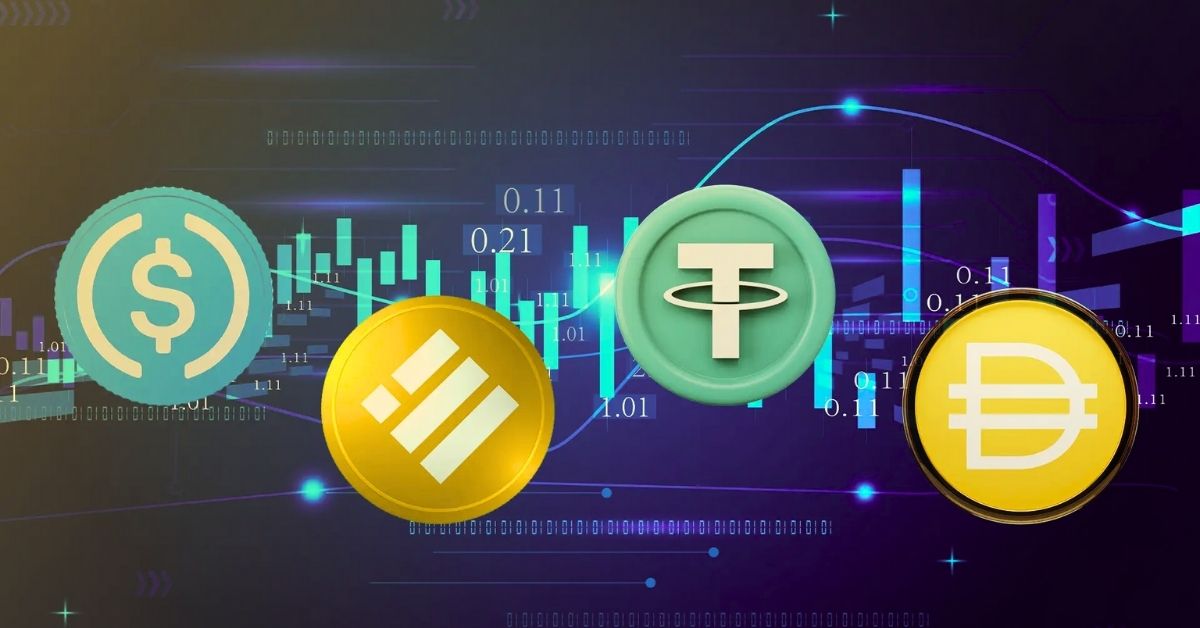
Stablecoins are a cornerstone of the DeFi ecosystem — offering the stability of fiat currencies with the transparency and efficiency of blockchain. They’re designed to minimize volatility by pegging their value to a reserve asset like the US dollar, euro, or even gold.
In the world of decentralized finance, stablecoins play a critical role as a medium of exchange, store of value, and unit of account. They enable users to move in and out of volatile assets, participate in lending, yield farming, and other DeFi protocols — all while avoiding the price swings of most cryptocurrencies.
How It Works:
Stablecoins are issued and maintained through various mechanisms:
- Fiat-collateralized: Backed 1:1 by reserves held by a custodian (e.g., USDC, USDT)
- Crypto-collateralized: Backed by other cryptocurrencies and managed via smart contracts (e.g., DAI by MakerDAO)
- Algorithmic: Maintains peg through supply and demand algorithms (e.g., FRAX, though this model has proven riskier)
Example Stablecoins in DeFi:
- Tether (USDT): The most traded stablecoin globally, though with ongoing transparency concerns
- USDC: Widely used in DeFi, trusted for transparency and regulatory compliance
- DAI: A decentralized stablecoin backed by crypto collateral
Stablecoins enable seamless participation in DeFi — from trading and lending to staking and DAOs. They’re also essential for cross-border payments, payroll, and hedging strategies in crypto portfolios.
However, it’s important to recognize the risks. Fiat-backed coins depend on centralized entities, and algorithmic stablecoins can fail under extreme market conditions, as seen with TerraUSD (UST). When using stablecoins in DeFi, diversification and awareness of backing mechanisms are key.
Staking
Staking is one of the most accessible and rewarding use cases in DeFi, allowing users to earn passive income simply by locking up their tokens in a network to help secure it or participate in governance.
In decentralized networks, staking replaces the traditional mining model. Instead of expensive hardware and high electricity bills, users can “stake” their tokens to support operations like validating transactions, producing blocks, or voting on protocol decisions — and receive rewards in return.
How It Works:
There are two main types of staking in DeFi:
- Network Staking (Proof-of-Stake protocols): Users stake their tokens (e.g., ETH, ATOM, SOL) to validators. These validators run the network and earn rewards, which are then shared with stakers.
- DeFi Protocol Staking: Users lock tokens in DeFi protocols (not for network validation but for earning protocol-specific benefits), such as governance rights, protocol fees, or farming multipliers.
Example Platforms:
- Ethereum (post-Merge): Users can stake ETH directly or through services like Lido or Rocket Pool
- Beincom: Supports $BIC Staking with flexible options
- Polygon (MATIC): Offers staking with multiple validators and competitive returns
- Binance Smart Chain (BSC): Numerous staking protocols for BEP-20 tokens
Staking is a go-to method for crypto holders to grow their assets while contributing to the network’s health — a true win-win in the DeFi world.
Learn more: Crypto Staking Explained: How It Works, Types & Benefits
Yield Farming
Yield farming, also known as liquidity mining, one of DeFi use cases for rewards, is where users move their crypto assets across protocols to earn the highest possible return. Think of it like chasing the best interest rates — only in a permissionless, decentralized financial playground.
It involves providing liquidity to DeFi platforms in exchange for rewards, often in the form of native governance tokens or a share of protocol fees. Yield farmers actively manage their funds, switching between pools, protocols, or blockchains to maximize returns.
Example Platforms for Yield Farming:
- Yearn Finance: Automatically allocates user funds to the best-yielding protocols
- SushiSwap: Offers “Onsen” farms that incentivize LP token staking
- PancakeSwap: Popular on BNB Chain with high APR farming pools
- Curve Finance: Optimized for stablecoin farming with boosted rewards for CRV holders
What Makes It Attractive:
- High potential returns: Especially in new or incentivized pools
- Double rewards: Earn swap fees and yield farming tokens
- Innovative strategies: Projects like Yearn bundle farming strategies for hands-off users
Yield farming is ideal for users who understand DeFi mechanics and are comfortable actively managing their positions. When done right, it can generate significant returns — but it’s not for the faint of heart.
Tokenization
Tokenization is one of major use cases of DeFi that involves converting real-world assets (such as real estate, art, or stocks) into digital tokens on the blockchain. These tokens can represent a fraction of the ownership or value of an asset, making it easier to trade, invest in, and transfer ownership of assets that would otherwise be difficult to access.
Tokenization opens the door to new opportunities in both traditional and decentralized finance by enabling fractional ownership. This democratizes access to high-value assets, making them accessible to anyone with an internet connection and a crypto wallet.
Example Platforms for Tokenization:
- RealT: A platform that allows users to invest in tokenized real estate properties
- Securitize: A security token platform that tokenizes traditional assets like equity and debt
- Polymath: Provides a platform for creating and managing security tokens
- tZero: A platform that offers tokenized trading for real-world assets like equity and bonds
What Makes Tokenization Attractive:
- Fractional ownership: Allows people to invest in expensive assets without needing full capital upfront
- Increased liquidity: Tokenized assets can be traded easily on the blockchain, making them more liquid
- Access to previously inaccessible markets: Real estate, art, and commodities are no longer reserved for wealthy investors
However, tokenization is not without challenges. Regulatory hurdles can prevent certain tokenized assets from being legally traded or recognized. Additionally, there is the risk of smart contract vulnerabilities and issues related to the proper custody of underlying assets.
DAOs (Decentralized Autonomous Organizations)
DAOs (Decentralized Autonomous Organizations) are organizations governed by smart contracts rather than centralized authorities or traditional management structures. The primary purpose of DAOs is to allow stakeholders to make decisions collectively without intermediaries, creating an environment of trust, transparency, and decentralization.
DAOs are particularly relevant in the DeFi space because they provide a decentralized way to manage and govern protocols. These organizations are powered by their community, and all decision-making is carried out via voting mechanisms that involve holders of the organization’s native governance tokens.
In a DAO, each member typically holds governance tokens that give them voting power. The more tokens a member holds, the more influence they have over decisions. Proposals are made, and members vote on them to decide on actions such as protocol upgrades, changes in governance, and fund allocation. These decisions are recorded on the blockchain, ensuring transparency and immutability.
DAOs Example:
- MakerDAO: The DAO that governs the Maker Protocol, a platform for generating the DAI stablecoin.
- Compound Governance: Compound’s DAO allows token holders to vote on protocol changes, including interest rate adjustments and token listings.
- Aave: Aave’s DAO allows the community to influence the direction of the platform, from deciding on which assets to support to protocol upgrades.
- Uniswap: The decentralized exchange platform’s DAO governs key decisions, such as token listings and protocol changes.
DAOs represent one of the most revolutionary aspects of DeFi, giving users the power to govern and influence platforms directly. With the right safeguards, DAOs can empower communities, encourage innovation, and help create truly decentralized financial systems.
For a more detailed overview of how DAOs work and their impact on DeFi, check out our in-depth article:
What Is a DAO? A Deep Dive into Decentralized Autonomous Organizations
Synthetic Assets and Derivatives
Synthetic assets and derivatives is one of the most revolutionary DeFi use cases that allow users to gain exposure to traditional assets, such as stocks, commodities, or currencies, without actually holding the underlying asset. This opens up new possibilities for diversification and hedging, especially for users in regions where access to traditional financial markets is limited.
By using smart contracts, DeFi platforms can replicate the value of real-world assets on the blockchain. Users can trade synthetic assets like sBTC (synthetic Bitcoin) or sETH (synthetic Ethereum) without owning the physical assets, enabling more flexible trading and investing strategies.
Examples:
- Synthetix: A platform offering synthetic assets representing real-world assets
- Mirror Protocol: A DeFi platform for creating synthetic assets that mirror traditional financial markets
- dYdX: A decentralized platform for trading derivatives like options and futures
However, synthetic assets and derivatives in DeFi also come with risks. These include smart contract vulnerabilities, liquidity issues, and potential manipulation of the price feeds. Additionally, regulatory concerns may arise as synthetic assets grow in popularity, which could introduce new challenges in the future.
DeFi has made it possible to access traditional financial instruments with fewer barriers, empowering users to engage in more sophisticated trading strategies.
Insurance
DeFi insurance is another exciting use case that aims to transform traditional insurance markets. Instead of relying on centralized insurance companies, DeFi platforms enable users to pool funds together and provide coverage for various risks, such as flight delays, natural disasters, or even smart contract failures.
The key advantage of DeFi insurance is its transparency and decentralization. Smart contracts automate the claims process, making the entire procedure faster and more transparent compared to traditional insurance, which often involves complex paperwork and long waiting periods.
Users can participate in decentralized insurance by contributing to a liquidity pool on platforms like Nexus Mutual or Cover Protocol. In return, they earn the opportunity to back specific insurance policies. If a claim is made, the pool funds are used to cover it, and smart contracts automatically determine the payout based on predefined criteria.
Payments and Remittances
DeFi platforms are increasingly being used for payments and remittances, providing faster, cheaper, and more secure alternatives to traditional financial services. By leveraging blockchain technology, these platforms allow users to send and receive money across borders without relying on banks or intermediaries.
The biggest advantage of DeFi for payments is the low cost. Traditional remittance services often charge high fees for cross-border transactions, and these payments can take several days to process. With DeFi, transactions are settled in minutes or seconds, and fees are significantly reduced.
To send funds via a DeFi platform, users typically convert their local currency into a cryptocurrency like USDT or stablecoins, which are pegged to fiat currencies. These funds can then be transferred directly to a recipient’s wallet without needing a bank or payment service provider.
Example Platforms:
- Stellar: A blockchain designed for fast, low-cost cross-border payments
- Ripple (XRP): Focuses on enabling real-time cross-border payments for financial institutions
- Celo: Aims to make financial services accessible to anyone with a smartphone
While DeFi payments and remittances offer numerous benefits, there are challenges such as adoption barriers, transaction fees on popular blockchains (like Ethereum), and regulatory concerns. However, with the increasing use of stablecoins and blockchain infrastructure, DeFi’s potential to revolutionize global payments remains significant.
Discover Beincom: Where DeFi Meets Social Power
As DeFi continues to unlock financial freedom across the globe, Beincom is pushing boundaries even further by combining the power of decentralized finance with social engagement and community-driven growth.
At its core, Beincom is a social hub and community platform where users can earn, connect, and grow — all while staying in control of their data and finances. Whether you’re staking tokens, joining DAOs, or farming yield, Beincom integrates core DeFi features with real social interaction, making your Web3 journey more human and rewarding.
What makes Beincom stand out?
- BIC Token: A multi-utility token designed for staking, rewards, DAO voting, and more.
- BIC Wallet: A secure, intuitive Web3 wallet using advanced MPC + SSS technology for safe, seamless access.
- Airdrop Ecosystem: Participate in long-term reward campaigns like the 300M $BIC Airdrop over 5 years, where active users earn real value.
- $BIC Staking: Lock your tokens with a tier-based staking system and earn passive rewards effortlessly.
- NFT Integration: Collect, display, or trade NFTs as digital badges, artworks, or access tokens across the platform.
- SocialFi at its core: Empowering users to earn and engage, not just scroll and consume, with many unique features like donations, upcoming Token-paid Direct Messaging (TPDM), Deep-ads,…
Beincom is not just a platform — it’s a movement toward a more open, equitable digital economy. Whether you’re a DeFi beginner or a seasoned Web3 explorer, there’s a place for you here.
Ready to take the leap? Join Beincom and see how DeFi can go beyond finance — into your social world.

FAQs
1. What’s the difference between staking and yield farming?
Staking involves locking tokens to secure a network and earn rewards, typically in the same token. Yield farming often involves providing liquidity to DeFi protocols and earning rewards, sometimes in multiple tokens, often with higher risk and return.
2. Are stablecoins really stable?
Stablecoins aim to maintain a 1:1 peg to a fiat currency like the USD. However, their stability depends on the mechanism behind them — collateralized, algorithmic, or centralized. Not all are equally safe.
3. How do DAOs fit into DeFi?
DAOs (Decentralized Autonomous Organizations) govern many DeFi platforms. They allow token holders to vote on decisions like fee structures, protocol upgrades, or funding proposals.
4. What are synthetic assets?
Synthetic assets mimic the value of real-world assets (e.g., gold, stocks) using blockchain-backed collateral and smart contracts. They let users gain exposure without owning the actual asset.
5. Is DeFi insurance trustworthy?
DeFi insurance aims to protect users from smart contract failures, hacks, or protocol risks. It’s a growing sector, but still evolving — always read the coverage terms carefully.
6. What makes Beincom different from other DeFi platforms?
Beincom combines DeFi tools with a full-fledged Web3 social experience. From staking and rewards to NFT badges and chat, it offers a more interactive, community-driven approach to decentralized finance.


![[BIC Airdrop 1/60] The First 5M Tokens Distributed](https://bictoken.global/wp-content/uploads/2025/05/1st-bic-airdrop-distributed.jpg)