If you’ve ever sent cryptocurrency—especially on networks like Ethereum—you’ve likely encountered something called a gas fee. Sometimes it’s small, sometimes surprisingly high, and for many beginners, it’s unclear why this extra cost exists at all.
Understanding what gas fee is and how it works is essential for anyone using blockchain networks. Gas fees are not random charges—they play a critical role in keeping the network secure, processing transactions, and preventing spam.
In this guide, we’ll tbreak down what gas fees are, how they are calculated, why they fluctuate, and how you can reduce them when using crypto.
What Is Gas Fee?
A gas fee is the cost required to perform a transaction or execute a smart contract on a blockchain network. It is essentially a payment made by users to compensate the network participants—such as validators—for processing and validating transactions.
On networks like Ethereum, every action requires computational resources. This includes simple transactions like sending crypto, as well as more complex operations like interacting with decentralized applications (dApps). Gas is the unit used to measure how much computational effort is needed for these operations.
The gas fee is then calculated based on how much gas is required and how much the user is willing to pay per unit of gas. The more complex the transaction, the more gas it consumes.
In simple terms:
- Gas = computational effort
- Gas fee = the cost you pay for that effort
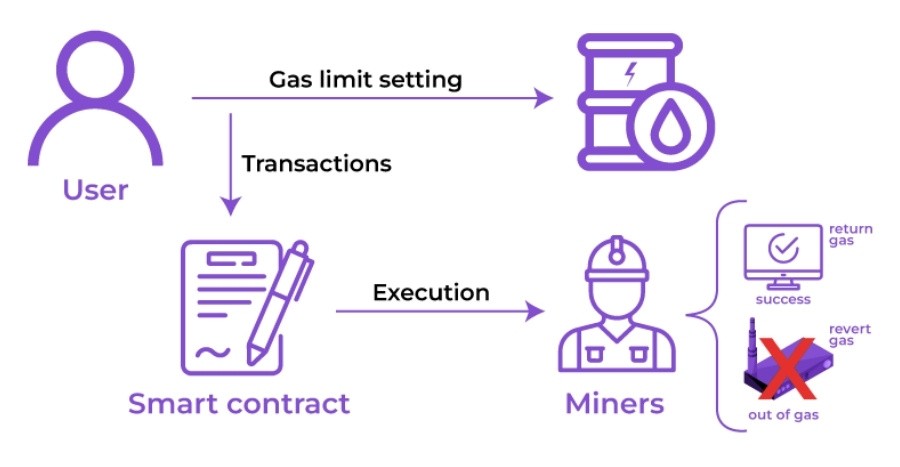
One important thing to understand is that gas fees must be paid even if a transaction fails. This is because the network still uses resources to process and validate the transaction, regardless of the outcome.
Why Are Gas Fees Needed?
Gas fees are a fundamental part of how blockchain networks operate. They are not just transaction costs—they serve important functions that keep the network secure, efficient, and functional.
Incentivize Validators
Gas fees act as a reward for validators (or miners in older systems) who process and confirm transactions.
On networks like Ethereum, validators use computational resources to verify transactions and add them to the blockchain. Gas fees compensate them for this work, ensuring that the network continues to operate smoothly.
Prevent Spam and Network Congestion
Without gas fees, users could send an unlimited number of transactions at no cost. This would quickly overload the network with spam or meaningless activity.
By requiring users to pay for each transaction, gas fees create a natural barrier that discourages unnecessary or malicious activity.
Protect Against Attacks
Gas fees also help protect the network from certain types of attacks, such as denial-of-service (DoS) or infinite loops in smart contracts.
Each transaction must define how much computational work it is allowed to use. If an operation exceeds this limit, it stops automatically—preventing the network from being overwhelmed.
For tips to protect your crypto, check out this article: What Is the Safest Way to Store Cryptocurrency in 2026?
Key Components of Gas Fees
To understand how gas fees are calculated, you need to know the key components that make up a transaction. These elements determine how much you pay and how quickly your transaction is processed.
Gas Limit
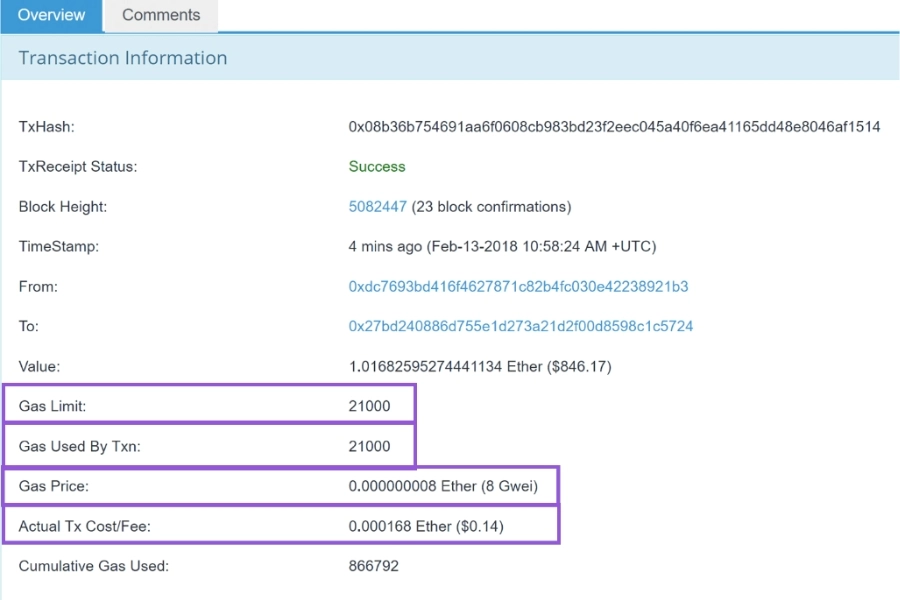
The gas limit is the maximum amount of gas you are willing to spend on a transaction.
Each type of transaction requires a certain amount of computational work. For example, a simple transfer typically requires less gas than interacting with a smart contract. By setting a gas limit, you define how much work the network is allowed to perform for your transaction.
If the gas limit is too low, the transaction may fail—but you will still pay for the gas used up to that point.
Gas Price
The gas price is the amount you are willing to pay per unit of gas. It is usually measured in gwei, a small unit of Ethereum (1 gwei = 0.000000001 ETH).
A higher gas price increases the likelihood that your transaction will be processed faster, as validators tend to prioritize transactions with higher fees.
Base Fee and Priority Fee (EIP-1559)
After the EIP-1559 upgrade on Ethereum, gas fees are now split into two parts:
Base Fee – This is the minimum fee required for a transaction. It is determined by network demand and is burned (permanently removed from circulation), rather than given to validators.
Priority Fee (Tip) – This is an optional extra fee paid to validators to prioritize your transaction, especially during times of network congestion.
These components work together to determine the total cost of a transaction. Next, we’ll look at how gas fees are calculated in practice, with clear examples.
How Are Gas Fees Calculated?
Gas fees are calculated based on two main factors: how much computational work a transaction requires and how much users are willing to pay for that work.
On networks like Ethereum, every transaction consumes a certain amount of gas depending on its complexity. A simple transfer requires less gas, while interacting with smart contracts requires significantly more.
Before EIP-1559
Before the EIP-1559 upgrade, gas fees were calculated using a simple formula:
Gas Fee = Gas Used × Gas Price
Where:
Gas Used = the amount of computational work required
Gas Price = the amount users are willing to pay per unit of gas
Example:
Gas used: 21,000
Gas price: 200 gwei
Gas fee = 21,000 × 200 = 4,200,000 gwei = 0.0042 ETH
In this model, users had to manually set the gas price, often competing with others to get their transactions processed faster.
After EIP-1559
After the EIP-1559 upgrade, the fee structure became more predictable:
Gas Fee = Gas Used × (Base Fee + Priority Fee)
Where:
Base Fee = automatically set by the network based on demand (and is burned)
Priority Fee (Tip) = optional extra paid to validators for faster processing
Example:
Gas used: 21,000
Base fee: 100 gwei
Priority fee: 10 gwei
Gas fee = 21,000 × (100 + 10) = 2,310,000 gwei = 0.00231 ETH
Important Notes:
- You are charged based on gas used, not the full gas limit
- If a transaction fails, you still pay gas because resources were used
- Fees increase when network demand is high
Why Are Gas Fees So High?
Gas fees can vary significantly, and at times—especially on Ethereum—they can become very expensive. This is mainly due to how blockchain networks handle demand and limited capacity.
- Limited Block Space: Each block on the blockchain can only include a limited number of transactions. This creates a natural bottleneck. When many users try to send transactions at the same time, not all of them can be processed immediately. As a result, users compete to get their transactions included in the next block.
- High Network Demand: When the network is busy—such as during NFT launches, DeFi activity, or market volatility—demand for block space increases. To prioritize their transactions, users are willing to pay higher fees. This competition pushes gas fees up.
- Complex Transactions: Not all transactions are equal. Simple transfers require relatively little gas, but interacting with smart contracts—such as swapping tokens, minting NFTs, or using DeFi platforms—requires more computational work. The more complex the transaction, the higher the gas fee.
- User Competition: Gas fees operate like an auction system. Users can add a higher priority fee (tip) to incentivize validators to process their transactions faster. When many users do this at the same time, fees can spike quickly.
In short, gas fees become high when demand exceeds available block space. Next, we’ll explore how you can reduce gas fees and save on transaction costs.
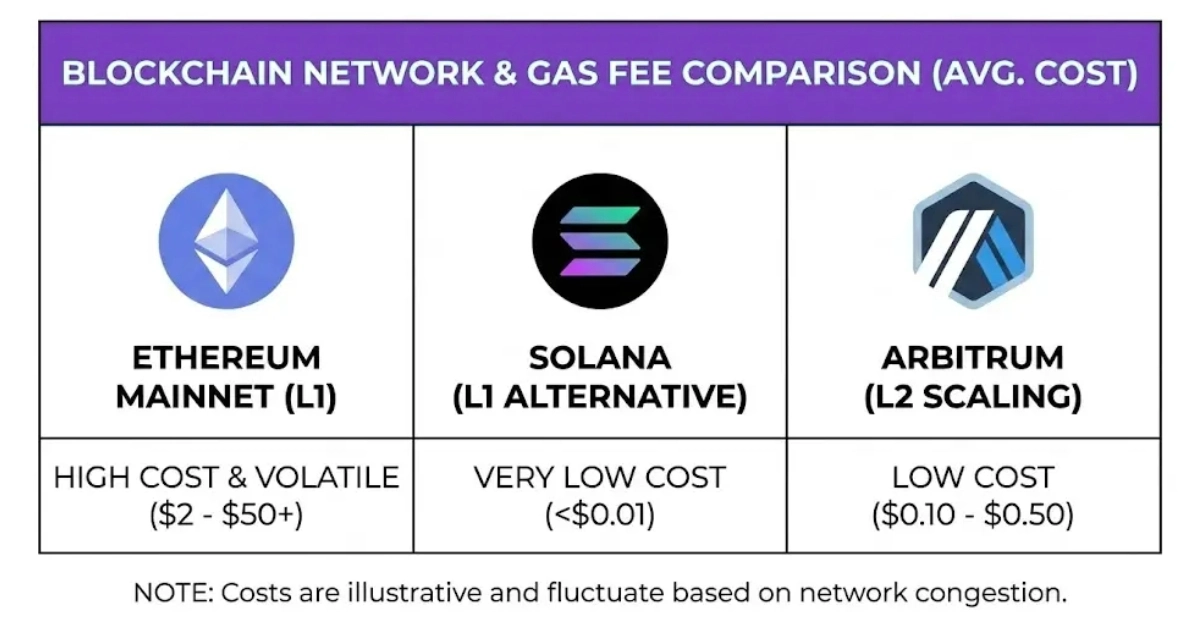
Gas Fees on Different Blockchains
Gas fees are not the same across all blockchain networks. While the concept originated from Ethereum, other blockchains have adopted similar or alternative fee models.
On Ethereum, gas fees are typically higher because:
- The network supports complex smart contracts
- Demand for block space is very high
- Many DeFi and NFT applications run on it
In contrast, other blockchains offer lower fees by using different designs or scaling solutions:
- BNB Chain → lower fees due to higher throughput and different consensus design
- Polygon → a Layer 2 solution that reduces congestion and cost
- Solana → uses a high-performance architecture to keep fees extremely low
However, lower fees often come with trade-offs, such as differences in decentralization, security, or ecosystem maturity.
How to Reduce Gas Fees
While gas fees are unavoidable, there are several ways to reduce how much you pay—especially on networks like Ethereum:
- Use Layer 2 solutions: Networks like Arbitrum and Optimism process transactions more efficiently, helping you save significantly on fees.
- Transact during low network activity: Gas fees are lower when fewer users are active. Avoid peak times like NFT drops or high market volatility.
- Adjust gas settings: You can lower the priority fee (tip) in your wallet to save costs, though this may slow down transaction speed.
- Use alternative blockchains: Networks such as BNB Chain or Polygon often offer similar functionality with much lower fees.
Conclusion
Gas fees are a fundamental part of how blockchain networks operate. They represent the cost of using network resources—whether you’re sending crypto, interacting with smart contracts, or using decentralized applications.
Understanding what a gas fee is, how it’s calculated, and why it fluctuates helps you make better decisions when transacting. Rather than seeing gas fees as a random cost, it’s more accurate to view them as a mechanism that keeps the network secure, efficient, and resistant to spam.
By choosing the right timing, adjusting settings, or using alternative networks and Layer 2 solutions, you can significantly reduce your costs while still benefiting from blockchain technology.