Choosing the right crypto exchange is one of the most important decisions for anyone entering the cryptocurrency market. The best crypto exchange can make it easier to buy, sell, trade, and store digital assets, while the wrong platform can lead to higher fees, poor security, or limited features.
Today, there are many exchanges available, and each one serves a different type of user. Some platforms are designed for beginners with simple interfaces and easy fiat deposits, while others focus on advanced trading tools, futures markets, copy trading, or access to smaller altcoins.
In this guide, we’ll explore the best crypto exchanges based on factors such as security, fees, available cryptocurrencies, trading features, and overall user experience. Whether you are a beginner, an active trader, or a long-term investor, there is likely a platform that fits your needs.
What Makes a Good Crypto Exchange?
Not all crypto exchanges offer the same experience. Some platforms focus on low fees, while others prioritize security, advanced trading tools, or beginner-friendly interfaces.
When choosing the best crypto exchange, there are several important factors to consider:
- Security: A good exchange should offer strong security features such as two-factor authentication, cold wallet storage, proof of reserves, and insurance funds.
- Liquidity: High liquidity means there are more buyers and sellers on the platform, which usually leads to faster order execution and lower price slippage.
- Trading fees: Fees can vary significantly between exchanges. Lower trading fees are especially important for active traders.
- Available cryptocurrencies: Some exchanges support only the largest coins, while others provide access to hundreds of altcoins and newly listed projects.
- Ease of use: Beginners often prefer platforms with simple interfaces, while advanced traders may want more detailed charts and trading tools.
- Trading products: Many exchanges now offer futures, margin trading, staking, copy trading, launchpads, and DeFi features in addition to spot trading.
- Regulatory compliance: Exchanges that follow regulations and licensing requirements may offer more stability and trust.
Customer support: Fast and reliable support can be important when dealing with account issues, deposits, or withdrawals. - Mobile app quality: Many users trade on their phones, so a good mobile experience can make a big difference.
The best exchange for one person may not be the best for another. It depends on your goals, trading style, and experience level.
Best Crypto Exchanges to Try in 2026
Binance
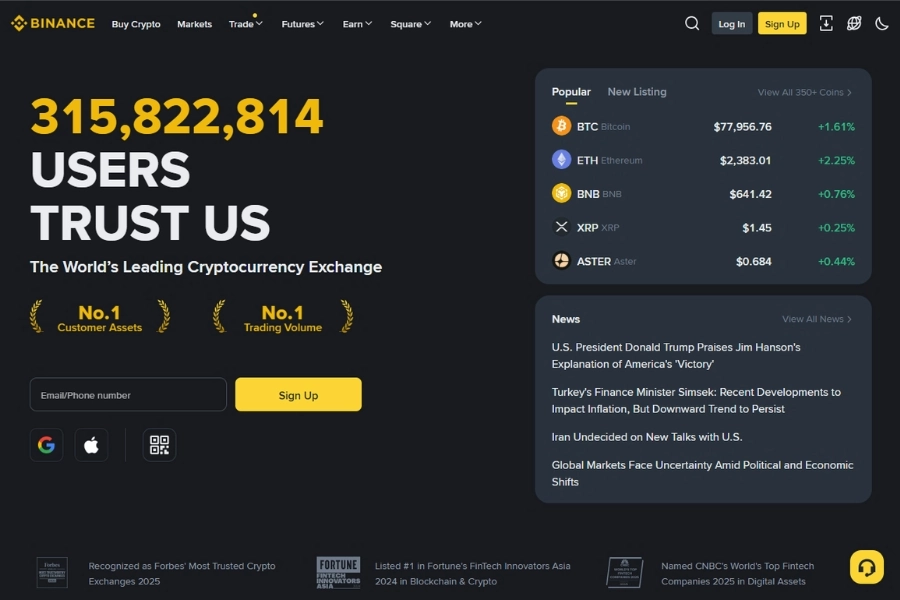
Founded in 2017, Binance is the world’s largest crypto exchange by trading volume and user base. It supports more than 600 cryptocurrencies and over 1,500 trading pairs, making it one of the most complete platforms for both beginners and advanced traders.
Binance offers a wide range of products, including spot trading, futures, margin, staking, copy trading, launchpads, and Web3 wallet features. Beginners can use Binance Lite, while experienced traders can access advanced tools through Binance Pro.
The platform is also known for its low fees. Spot trading starts at 0.10%, while paying with BNB reduces fees by 25%. Futures fees start at 0.02% maker and 0.05% taker.
On the security side, Binance uses cold wallet storage, two-factor authentication, withdrawal whitelists, Proof of Reserves, and the SAFU protection fund.
Key Features:
- Largest crypto exchange by trading volume
- Supports 600+ cryptocurrencies
- Low trading fees with BNB discounts
- Spot, futures, margin, and staking products
- Beginner-friendly Lite mode and advanced Pro tools
- Strong security with Proof of Reserves and SAFU fund
Coinbase
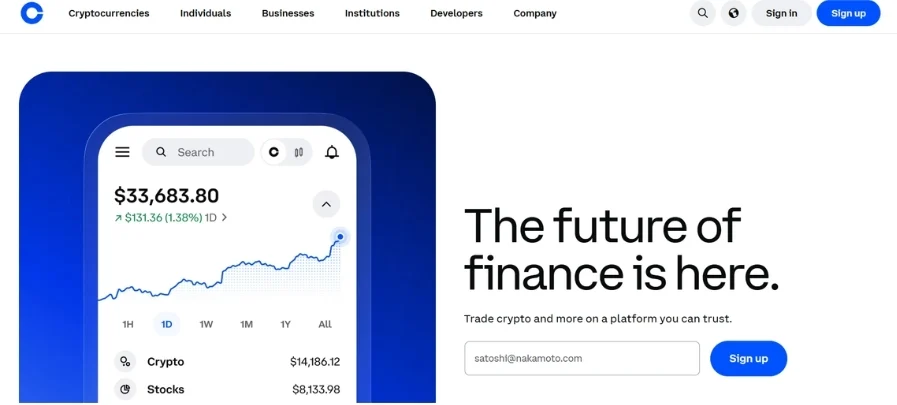
Coinbase is one of the most beginner-friendly crypto exchanges in the market and is especially popular among U.S. users.
Founded in 2012, Coinbase has built a strong reputation around simplicity, regulation, and trust. Unlike many global exchanges that focus heavily on advanced trading features, Coinbase is designed to make buying and selling crypto as easy as possible.
The platform supports more than 250 cryptocurrencies and offers convenient fiat payment methods such as bank transfers, debit cards, and wire transfers. This makes it easy for first-time users to move from traditional finance into crypto.
Coinbase also provides additional tools beyond basic spot trading. Users can access staking rewards, educational content through Coinbase Learn, a self-custody wallet, and Coinbase Advanced Trade for more advanced charting and lower fees.
Compared to exchanges like Binance, Coinbase tends to have higher fees. The standard buy and sell interface can charge between 0.5% and 3.99%, depending on the payment method, although Coinbase Advanced Trade offers lower maker and taker fees.
Security is one of Coinbase’s biggest selling points. The platform stores most customer assets in cold storage, offers two-factor authentication and biometric login, and operates under strict U.S. regulatory oversight.
Key Features:
- Simple and beginner-friendly interface
- Strong reputation for trust and regulation
- Supports 250+ cryptocurrencies
- Easy fiat deposits and withdrawals
- Coinbase Advanced Trade for experienced users
- Staking, learning tools, and self-custody wallet support
Kraken
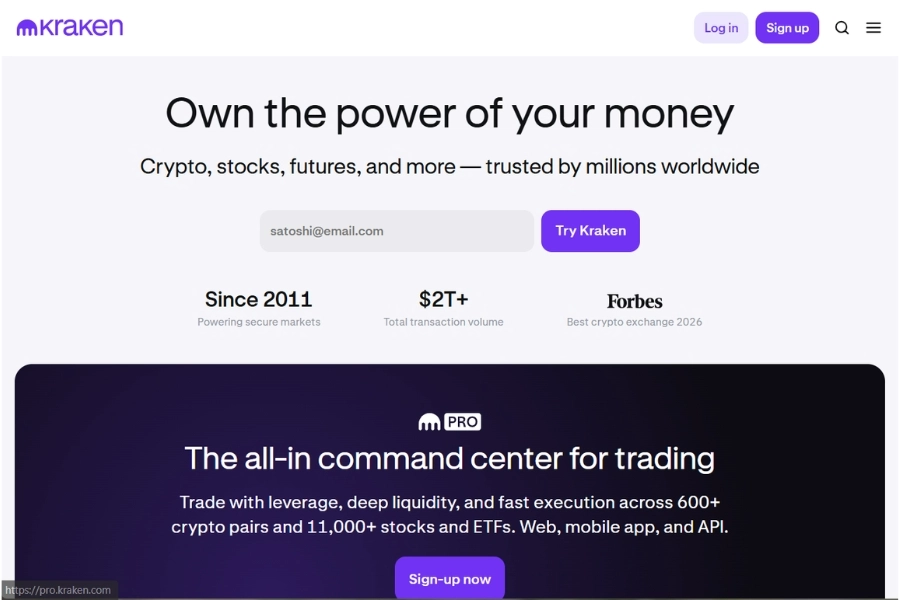
For users who care most about security, Kraken is often considered one of the safest crypto exchanges available.
Kraken has built its reputation around transparency, strong account protection, and regulatory compliance. Unlike some exchanges that focus mainly on listing new coins or offering aggressive trading products, Kraken prioritizes security and stability.
The platform supports more than 350 cryptocurrencies and offers spot trading, futures, staking, margin trading, and advanced tools through Kraken Pro. While its coin selection is smaller than exchanges like Binance, Kraken is still strong for major assets and high-liquidity trading pairs.
One of Kraken’s biggest advantages is its security track record. The exchange stores most user funds in cold wallets, supports Proof of Reserves audits, and offers features such as two-factor authentication, withdrawal allowlists, and hardware security key support.
Kraken’s fees are also fairly competitive. Kraken Pro spot trading fees typically start around 0.25% maker and 0.40% taker, with lower fees available for higher trading volumes.
Because of its focus on trust and compliance, Kraken is especially popular among long-term investors and users in regulated markets.
Key Features:
- Strong reputation for security
- Proof of Reserves and cold wallet storage
- Supports 350+ cryptocurrencies
- Spot, futures, margin, and staking products
- Kraken Pro for advanced trading tools
- Strong regulatory compliance and transparency
Bybit
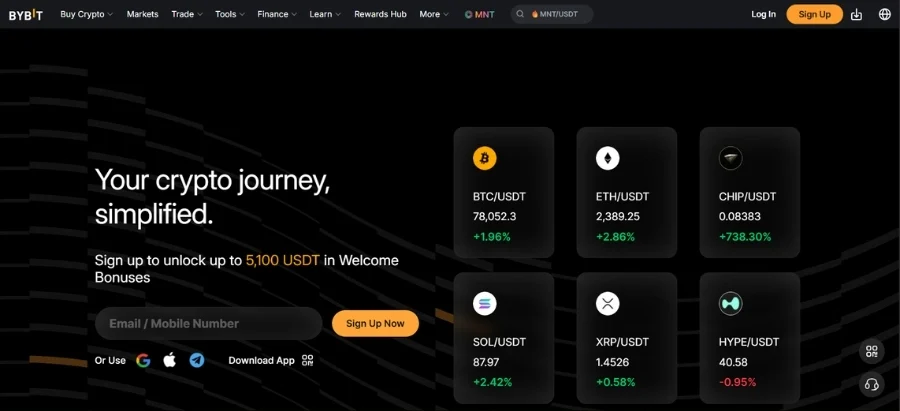
Bybit is one of the most popular exchanges for futures and derivatives trading.
The platform is known for its fast trading engine, deep liquidity, and strong support for perpetual futures contracts. It has become especially popular among active traders who want access to leverage, advanced charting tools, and more sophisticated order types.
In addition to futures trading, Bybit also offers spot trading, staking, copy trading, trading bots, and Web3 wallet features. The platform has expanded significantly in recent years and now supports hundreds of cryptocurrencies.
Bybit’s trading fees are competitive, with spot fees starting around 0.10% and futures fees starting at 0.02% maker and 0.055% taker. This makes it one of the more affordable options for active traders.
The exchange also offers a clean interface that is easier to navigate than some larger competitors. However, beginners who are unfamiliar with leverage and derivatives may still find the platform complex.
Key Features:
- Strong focus on futures and derivatives trading
- Deep liquidity for major trading pairs
- Competitive spot and futures fees
- Supports copy trading and trading bots
- Advanced charting tools and order types
- Offers spot trading, staking, and Web3 features
OKX
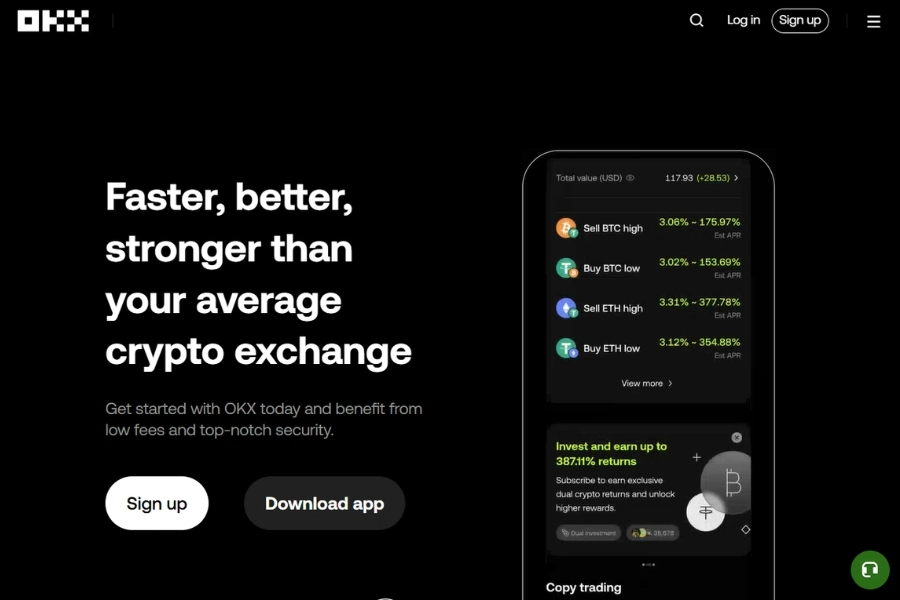
OKX is a strong choice for users who want more than just basic spot trading. The platform offers a large ecosystem that includes spot trading, futures, margin, options, staking, bots, DeFi tools, NFTs, and a self-custody Web3 wallet. Because of its broad range of products, OKX is often used by more advanced traders and active crypto users.
OKX supports hundreds of cryptocurrencies and is known for its strong liquidity across both spot and derivatives markets. It also provides advanced charting tools, multiple order types, and API access for professional traders.
Compared to some beginner-focused exchanges, OKX has a steeper learning curve. However, experienced users often prefer it because it combines centralized exchange features with access to DeFi and Web3 services in one platform.
Its trading fees are competitive, with spot fees starting at 0.08% maker and 0.10% taker for regular users, while derivatives fees can be even lower for high-volume traders.
Key Features:
- Strong platform for advanced traders
- Supports spot, futures, margin, and options
- Integrated DeFi, NFT, and Web3 wallet features
- Competitive trading fees
- Good liquidity across spot and derivatives markets
- Advanced charting tools and API access
KuCoin
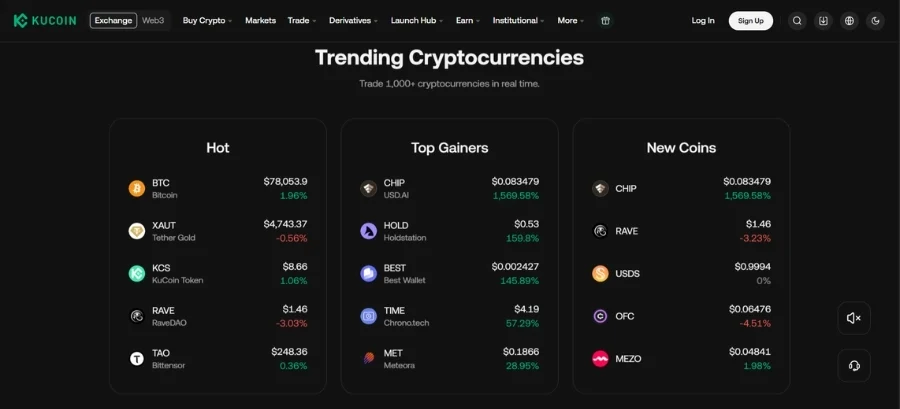
KuCoin is one of the best crypto exchanges for users who want access to a large number of altcoins and smaller projects.
Compared to more conservative exchanges like Coinbase, KuCoin tends to list new tokens much earlier. This makes it popular among traders looking for emerging cryptocurrencies before they reach larger platforms.
The exchange supports hundreds of cryptocurrencies and offers spot trading, futures, margin, staking, lending, and trading bots. It also has a strong community around smaller-cap projects and speculative trading opportunities.
KuCoin’s fees are relatively low, with spot trading fees starting at 0.10%. Users can also receive discounts by holding and paying fees with KuCoin Token.
Because of its large number of listed coins, KuCoin can feel overwhelming for beginners. It is generally better suited for users who already understand the basics of crypto trading and want broader market access.
Key Features:
- Large selection of altcoins and smaller tokens
- Early listings for new crypto projects
- Supports spot, futures, margin, and staking
- Built-in trading bots and lending features
- Competitive trading fees
- Discounts available with KuCoin Token
Bitget
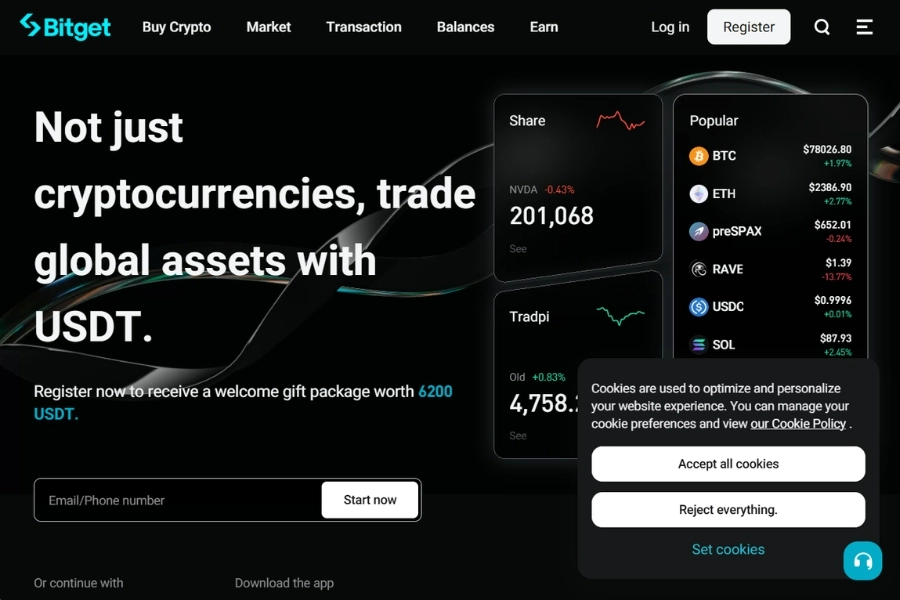
Bitget is best known for its copy trading features, which allow users to automatically follow the strategies of more experienced traders.
This makes the platform especially attractive for beginners or casual investors who want exposure to crypto trading without making every decision themselves.
In addition to copy trading, Bitget offers spot trading, futures, margin, staking, and trading bots. The exchange has grown rapidly in recent years and now supports hundreds of cryptocurrencies across both spot and derivatives markets.
Bitget is particularly strong in futures and derivatives trading, with competitive fees starting at 0.02% maker / 0.06% taker. Spot trading fees are also very attractive, with a base rate of 0.01% for both maker and taker, which can be reduced further (up to 80% discount) by holding Bitget’s native token (BGB) or reaching higher VIP tiers.
The platform has invested heavily in security, including Proof of Reserves, cold wallet storage, and a protection fund designed to help cover extreme situations.
Key Features:
- Strong copy trading ecosystem
- Supports spot, futures, and margin trading
- Competitive trading fees
- Large selection of cryptocurrencies
- Proof of Reserves and protection fund
- Suitable for beginners and passive traders
Gemini
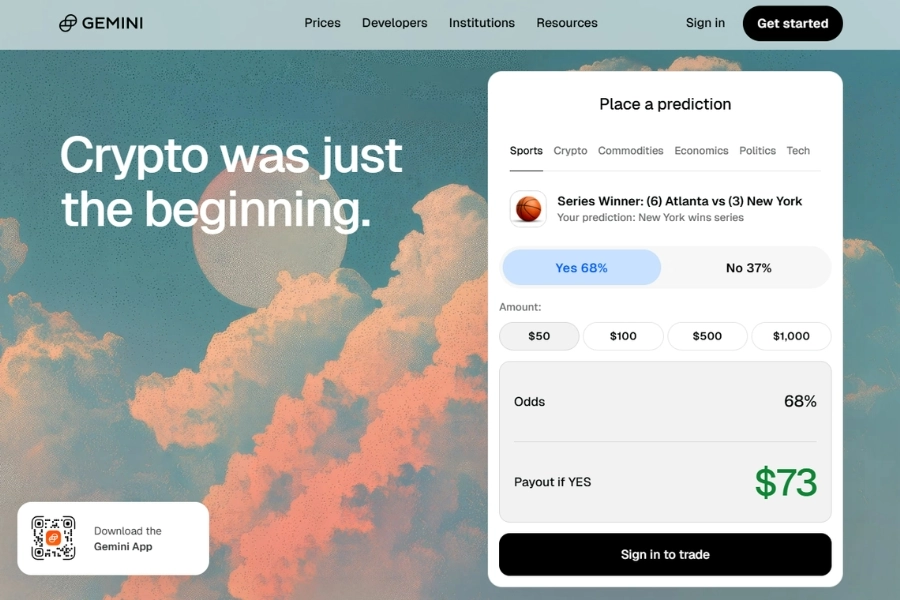
Gemini is often viewed as one of the most regulation-focused crypto exchanges in the market.
Founded by Cameron Winklevoss and Tyler Winklevoss, Gemini has built its reputation around trust, compliance, and security rather than aggressive product expansion.
The platform supports fewer cryptocurrencies than exchanges like Binance or KuCoin, but it remains popular among conservative investors who prefer a more regulated environment.
Gemini offers spot trading, staking in selected regions, institutional custody services, and an advanced trading interface called ActiveTrader. The exchange is also known for strong security features, including cold storage, insurance coverage for certain assets, and regular security audits.
Fees on Gemini are generally higher than some global competitors, especially for users on the simple buy and sell interface. However, ActiveTrader offers lower fees and is more suitable for experienced users.
Key Features:
- Strong focus on regulation and compliance
- Popular among U.S. users and institutions
- Secure custody and cold storage
- ActiveTrader for more advanced trading
- Insurance coverage for selected assets
- Suitable for conservative investors
MEXC
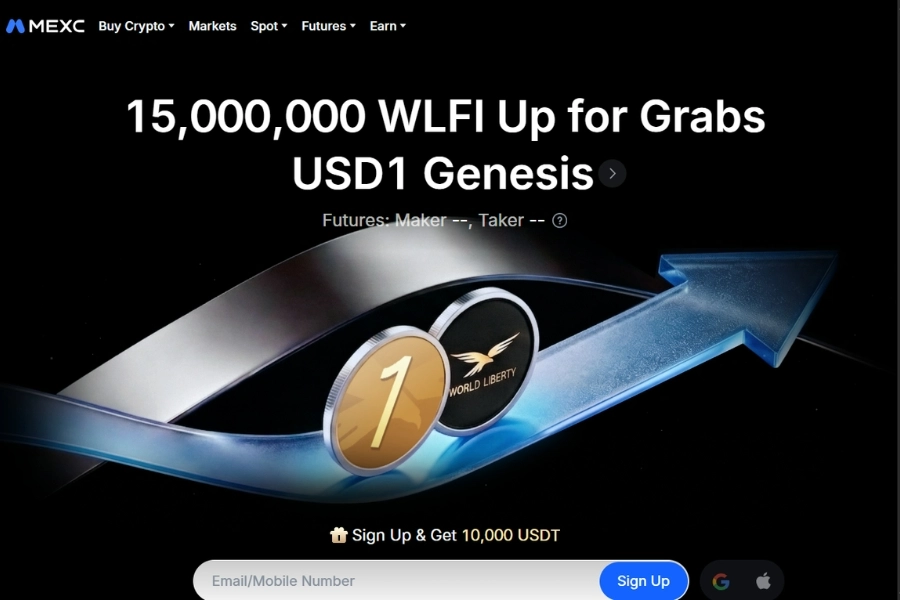
MEXC is popular among traders who want early access to newly listed cryptocurrencies and smaller-cap projects.
Compared to larger exchanges that focus mainly on major coins, MEXC tends to list new tokens much faster. This has made it a favorite platform for users looking for speculative opportunities and fast-moving altcoins.
The exchange supports a large number of cryptocurrencies and offers spot trading, futures, margin trading, ETFs, staking, and launchpad features. It is especially well known for its broad altcoin selection.
MEXC also offers competitive fees. Spot trading is often available with zero maker fees on selected pairs, while futures fees can start as low as 0.00% maker and 0.02% taker.
Because of its focus on smaller tokens, MEXC is better suited for users who already understand crypto risk and volatility.
Key Features:
- Large selection of altcoins and new tokens
- Early access to newly listed projects
- Spot, futures, margin, and ETF products
- Competitive trading fees
- Strong choice for speculative traders
- Launchpad and staking features
crypto.com
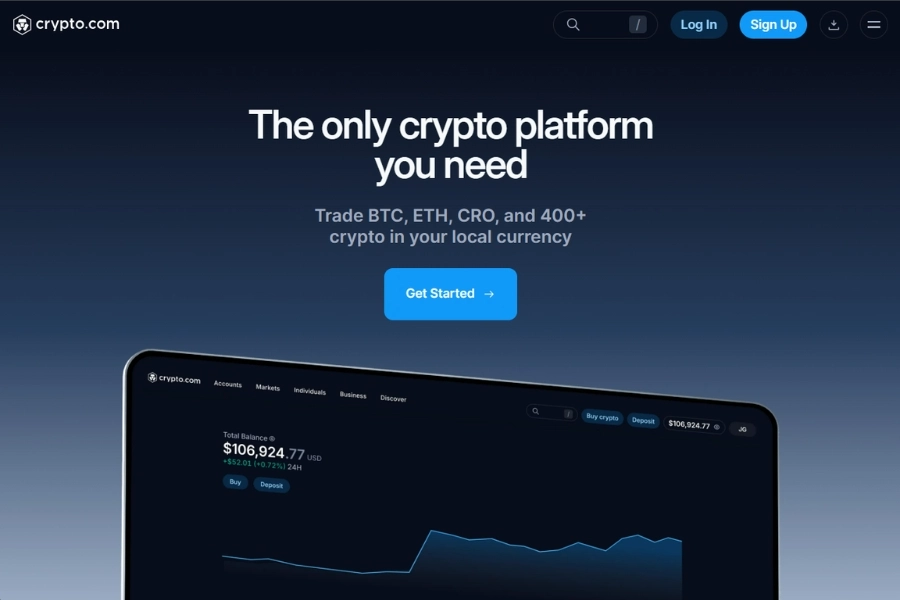
crypto.com is one of the most user-friendly exchanges for people who prefer trading and managing crypto through a mobile app.
The platform combines a crypto exchange, payment card, rewards system, staking products, and DeFi features into a single ecosystem. This makes it especially attractive for casual investors who want more than just a trading platform.
crypto.com supports hundreds of cryptocurrencies and allows users to buy crypto with bank transfers, debit cards, and Apple Pay in selected regions.
The platform also offers benefits tied to holding Cronos, including lower fees, cashback rewards, and higher staking yields.
While crypto.com is convenient and beginner-friendly, its standard trading fees can be higher than exchanges like Binance or OKX unless users hold enough CRO tokens to unlock discounts.
Key Features:
- Strong mobile app experience
- Supports hundreds of cryptocurrencies
- Integrated crypto card and rewards ecosystem
- Easy fiat deposits and purchases
- Staking and DeFi features
- CRO-based fee discounts and cashback rewards
How to Choose the Best Crypto Exchange
The best crypto exchange depends on your goals and experience level.
- Beginners may prefer Coinbase because of its simple interface and easy fiat deposits.
- Active traders may prefer Binance, Bybit, or OKX because of their low fees and advanced trading tools.
- Users who care most about security may prefer Kraken or Gemini.
- Traders looking for smaller altcoins may prefer KuCoin.
- Investors interested in copy trading may prefer Bitget.
When comparing exchanges, pay attention to:
- fees
- security features
- supported cryptocurrencies
- available countries
- liquidity
- trading products
- customer supportl
The best exchange is not always the biggest one. It is the platform that best matches your trading style, location, and experience.
FAQs
Q1. Which crypto exchange has the lowest fees in 2026?
MEXC currently offers the lowest spot trading fees among major crypto exchanges, with 0% maker / 0.05% taker (and 0%/0% on many popular pairs thanks to zero-fee promotions).
OKX follows with base fees of 0.08% maker / 0.10% taker, while Binance starts at 0.10% for both maker and taker. You can further reduce these costs by holding the platform’s native utility token (MX for MEXC, OKB for OKX, or BNB for Binance) or by reaching higher VIP tiers based on your 30-day trading volume.
Q2. Is it safe to keep my money on a crypto exchange?
While modern exchanges use advanced security like multi-party computation (MPC) and Proof of Reserves (PoR), it is a best practice to only keep funds on an exchange that you intend to trade. For long-term “HODLing,” transferring your assets to a non-custodial hardware wallet (cold storage) is significantly safer.
Q3. Which crypto exchange is best for beginners?
Coinbase is widely considered the best for beginners due to its intuitive user interface and “Coinbase Learning” rewards. Binance is also a strong contender because of its “Lite” mode, which strips away complex professional trading tools for a simplified experience.
Q4. Are crypto exchanges regulated in the US?
Yes, but the landscape is specific. Exchanges like Coinbase, Kraken, and Gemini are registered as Money Services Businesses (MSBs) and comply with strict state and federal regulations. In 2026, most major exchanges also follow the joint SEC-CFTC oversight model to ensure investor protection and market transparency.
Q5. Can I buy Bitcoin with a credit card on these platforms?
Most top-tier exchanges, including Binance, Bybit, and KuCoin, allow you to purchase Bitcoin and other assets directly via credit/debit cards or Apple/Google Pay. However, be aware that card issuers may charge “cash advance” fees, and exchange processing fees for card buys are typically higher (1.5%–3.5%) than bank transfers (ACH/SEPA).
Q6. What is “Proof of Reserves” and why does it matter?
Proof of Reserves (PoR) is an independent audit that proves an exchange holds enough assets to cover all customer balances 1:1. After the market shifts of previous years, PoR has become an industry standard in 2026 to ensure that an exchange is not “commingling” or lending out user funds without permission.