Cryptocurrencies have evolved far beyond the early days of Bitcoin. What started as a single form of digital money has expanded into a diverse ecosystem of assets designed for different purposes — from powering decentralized applications to enabling private transactions, supporting gaming economies, or even representing real-world assets on-chain.
Understanding the types of cryptocurrencies is essential for anyone exploring the crypto market. Each category serves unique functions, carries different levels of risk, and plays a specific role in the broader blockchain landscape. Whether you’re an investor, a builder, or simply curious, knowing how these assets differ will help you navigate the rapidly growing digital economy with confidence.
What Defines a Cryptocurrency Type?
Cryptocurrencies are categorized based on how they function, what they’re built for, and the technology behind them. Understanding these distinctions helps investors navigate the market more confidently and choose assets that align with their goals.
Utility vs. Design vs. Use Case
A cryptocurrency’s “type” is often determined by its primary purpose.
Some tokens are designed to pay for network fees, others power applications, secure blockchains, or represent ownership. By looking at how a crypto asset is used — whether for governance, payments, staking, or trading — we can group it into specific categories like utility tokens, governance tokens, or payment coins.
Layer-1 vs. Layer-2 vs. Tokens
Another way to classify crypto is by the blockchain layer it belongs to.
- Layer-1 cryptocurrencies (like Bitcoin or Ethereum) run on their own independent blockchains, providing the base network for transactions and smart contracts.
- Layer-2 solutions (such as Polygon or Arbitrum) operate on top of a Layer-1 chain to improve speed and reduce costs.
- Tokens, on the other hand, don’t have their own blockchain — they’re built on existing networks (for example, ERC-20 tokens built on Ethereum) and rely on that underlying chain for security.
Read more: Layer 1 vs Layer 2: What’s the Difference in Blockchain Architecture?
Fungible vs. Non-Fungible Assets
Cryptos can also be divided into fungible and non-fungible categories.
- Fungible assets — like BTC, ETH, or USDT — are interchangeable, meaning each unit has the same value as another.
- Non-fungible tokens (NFTs) are unique digital items that cannot be exchanged one-to-one, often representing art, collectibles, in-game items, or digital ownership.

Major Types of Cryptocurrencies
Cryptocurrencies come in many forms, each designed for different purposes—from digital payments and decentralized finance to gaming, governance, and cross-chain interoperability. Below is a clear breakdown of the major crypto categories you should know.
Payment Cryptocurrencies
Payment cryptocurrencies are the original form of digital money — assets created to transfer value quickly, securely, and without relying on banks or intermediaries.
Bitcoin is the most well-known example, designed as a peer-to-peer electronic cash system that allows anyone in the world to send funds within minutes. Other networks like Litecoin and Bitcoin Cash expand on this idea by offering lower fees and faster processing times.
These coins focus on reliability, decentralization, and censorship resistance, making them ideal for international transfers, everyday spending in crypto-friendly regions, and long-term value storage.
While newer crypto categories have emerged, payment coins remain the foundation of the digital asset economy.

Smart Contract Platforms (Layer-1 Blockchains)
Smart contract platforms represent the next major evolution of blockchain technology. Instead of simply recording transactions, chains like Ethereum, Solana, and Avalanche allow developers to build decentralized applications directly on the blockchain. These platforms function like programmable operating systems, enabling use cases such as DeFi lending, NFT marketplaces, identity systems, decentralized exchanges, and complex financial protocols.
Each Layer-1 has its own architecture, security model, and performance strengths — Ethereum focuses on decentralization and developer ecosystem, Solana emphasizes high throughput and low fees, while Avalanche offers flexible subnet infrastructure.
Smart contract platforms are the backbone of the modern crypto ecosystem and remain one of the most active areas of innovation.

Stablecoins
Stablecoins were created to solve one of crypto’s biggest challenges: volatility. These digital assets are designed to maintain a predictable value, most commonly pegged 1:1 to the U.S. dollar.
Fiat-backed stablecoins like USDT and USDC hold real cash reserves to stay stable, while decentralized alternatives like DAI use crypto-backed collateral locked in smart contracts. Some projects have experimented with algorithmic designs, although many of those failed due to unstable economic models. Regardless of the type, stablecoins play a crucial role in trading, remittances, payments, and DeFi, acting as a bridge between crypto markets and traditional finance.
Their growing adoption globally highlights how essential price-stable digital money has become.

Governance Tokens
As blockchain networks became more decentralized, governance tokens emerged to give users a voice in decision-making. These tokens allow holders to vote on protocol upgrades, treasury spending, fee structures, and long-term development plans.
Projects such as Uniswap, Aave, and MakerDAO use governance tokens to manage their ecosystems without centralized control. While governance tokens do not represent traditional corporate ownership, they do give the community influence over how the platform operates. This makes them a key component of decentralized autonomous organizations (DAOs), where rules and changes are determined by token-based voting.
Governance tokens illustrate the shift from company-driven platforms to community-driven networks.

Utility Tokens
Utility tokens are designed to power specific products or ecosystems. Instead of representing ownership or acting as money, utility tokens provide access to features, services, or functionalities within a network. For example, BNB can be used to pay transaction fees and access Binance ecosystem services, Chainlink’s LINK token powers decentralized oracle operations, and Filecoin’s FIL token is used to pay for decentralized storage.
The value of a utility token is tied directly to the demand for its underlying platform — the more people use the network, the more demand exists for the token itself. Utility tokens remain one of the broadest and most diverse categories in the crypto industry.

Security Tokens
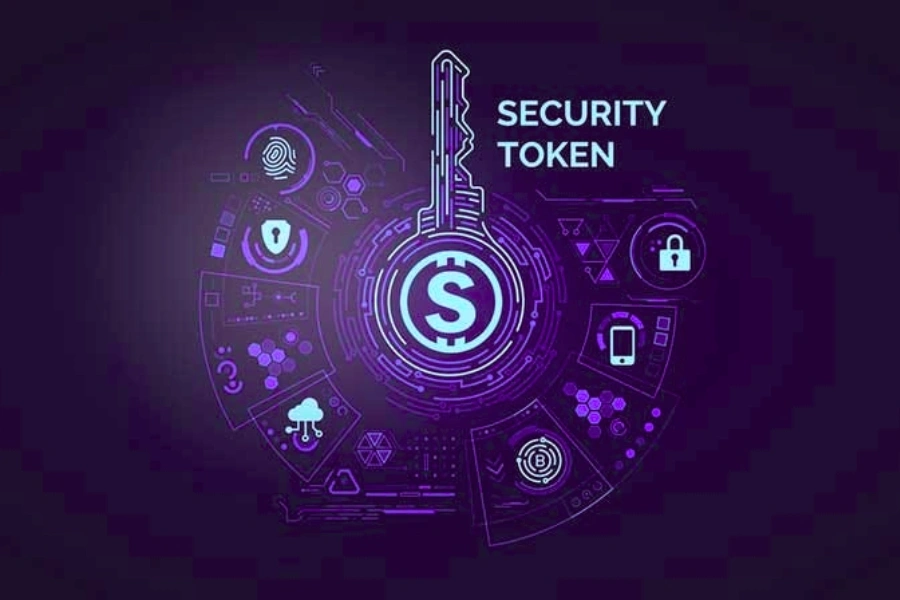
Security tokens represent a bridge between blockchain and traditional finance. Unlike most crypto assets, security tokens are regulated financial instruments backed by real-world assets such as company shares, real estate, government bonds, or revenue streams.
These tokens offer investors exposure to tangible assets while benefiting from blockchain features like instant settlement and transparent ownership tracking. Security tokens are typically issued through Security Token Offerings (STOs), which must comply with securities laws.
Although adoption is slower due to regulatory requirements, security tokens showcase how blockchain can modernize capital markets and broaden access to investment opportunities.
Privacy Coins
Privacy coins were created for users seeking confidential or anonymous transactions. Unlike Bitcoin, where every transaction is publicly visible, privacy coins use advanced cryptographic techniques to obscure wallet addresses, amounts, and sender–receiver relationships.
Monero uses stealth addresses and ring signatures to ensure full anonymity, while Zcash offers zero-knowledge proofs for optional privacy. Dash takes a hybrid approach with PrivateSend features. These coins appeal to individuals who prioritize financial privacy, especially in regions with economic surveillance or political instability.
At the same time, their anonymity features have drawn regulatory scrutiny, making them one of the most debated categories in the ecosystem.

Meme Coins
Meme coins are a unique cultural phenomenon in the crypto world. They often begin as jokes or internet memes but can grow into massive communities with real trading volume.
Dogecoin was the first, born from a Shiba Inu meme, while Shiba Inu and BONK built on community energy, hype, and viral marketing. Although these coins typically lack the deep technical foundations of major blockchain projects, their strength lies in branding, community engagement, and social influence.
Meme coins demonstrate how internet culture can shape financial markets — but they also come with high volatility and speculative risk.

GameFi and Metaverse Tokens
GameFi and metaverse tokens power the economies of blockchain-based games and virtual worlds. Projects like Axie Infinity, The Sandbox, and Decentraland allow players to earn tokens, trade digital assets, participate in virtual economies, and even own virtual land.
These tokens often serve multiple purposes: governance, in-game purchases, rewards, and access to exclusive digital content. The rise of play-to-earn models and immersive metaverse experiences has turned these tokens into important building blocks of digital entertainment.
While the sector has periods of intense hype, it continues to evolve as gaming studios and Web3 developers explore long-term economic models.

Wrapped Tokens
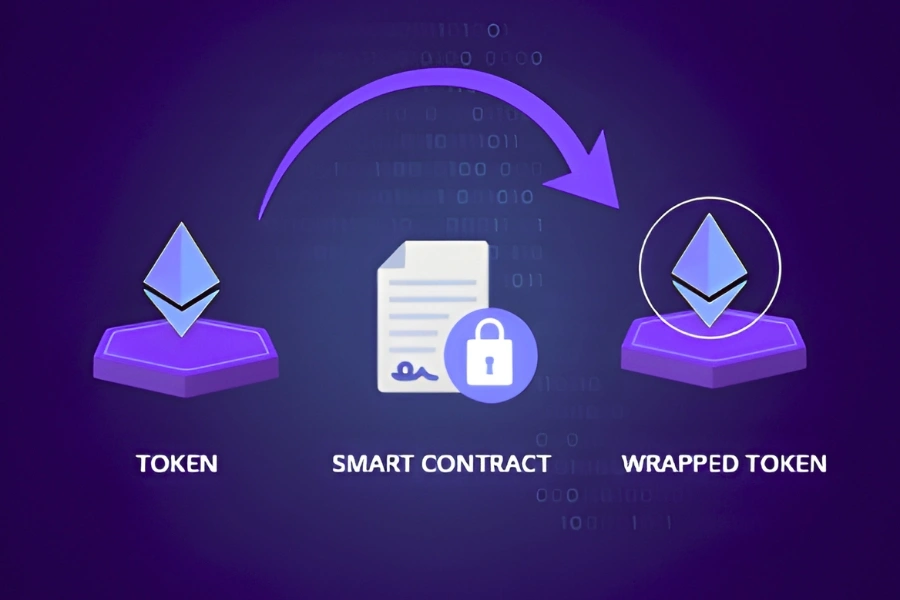
Wrapped tokens enable interoperability between different blockchain networks. A wrapped token represents another asset on a non-native chain — for example, Wrapped Bitcoin (WBTC) brings BTC to the Ethereum ecosystem, allowing Bitcoin holders to participate in DeFi.
The original asset is locked in a secure smart contract or custodial vault, while the wrapped version acts as a 1:1 representation on another chain. This mechanism increases liquidity across networks and enhances the usability of major crypto assets.
Wrapped tokens have become essential for the multichain ecosystem, especially as users demand seamless cross-chain experiences.
Exchange Tokens
Exchange tokens are issued by centralized or decentralized trading platforms to support their ecosystem and incentivize user participation.
Many exchanges use these tokens to offer trading fee discounts, staking rewards, governance rights, or access to token launchpads. Binance’s BNB is the most well-known example, evolving from an exchange token into the native asset of the Binance Smart Chain. Other platforms like OKX and Huobi offer similar tokens tied to fee reductions and platform utilities.
Exchange tokens thrive with the growth of their platforms, making them a direct reflection of exchange activity and user adoption.
Liquid Staking Tokens (LSTs)
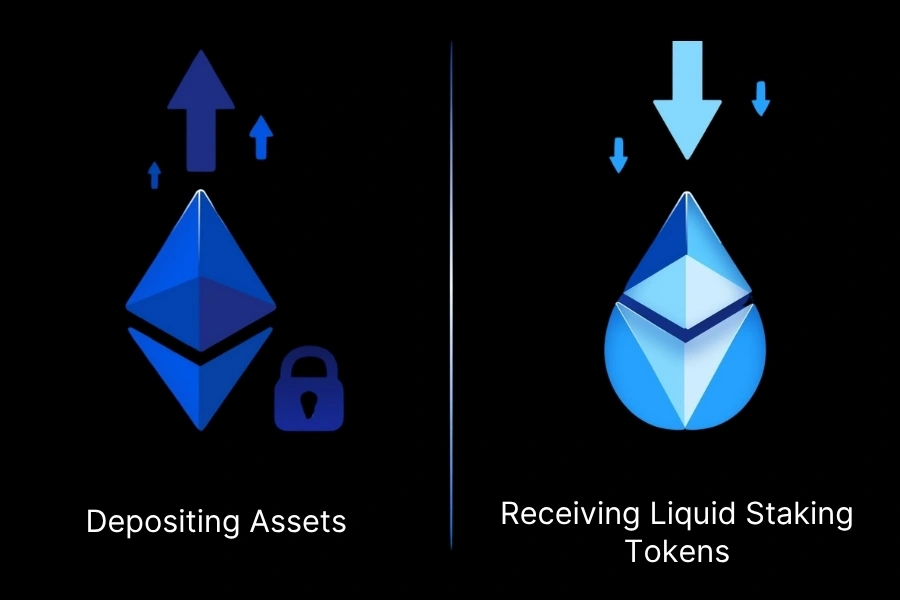
Liquid Staking Tokens (LSTs) are one of the newest and fastest-growing categories in crypto. Traditionally, staked assets such as ETH become locked and unusable — but LSTs solve this by issuing a liquid token that represents your staked position. This means users can earn staking rewards while still using their tokens across DeFi protocols. Projects like stETH, rETH, and cbETH have become foundational to Ethereum’s staking economy.
LSTs improve capital efficiency, decentralization, and staking accessibility, making them a key innovation in the modern Proof-of-Stake landscape.
Read more: Crypto Staking Explained: How It Works, Types & Benefits
Emerging Categories of Cryptocurrencies
As blockchain technology matures, new categories of digital assets continue to appear, pushing the boundaries of how crypto can be used in the real world. These emerging sectors are growing rapidly and illustrate how blockchain is evolving beyond financial speculation into infrastructure, AI, real-world utility, and tokenized ownership. Two of the most important new categories are Real-World Asset (RWA) tokens and AI/DePIN tokens.
Real-World Asset (RWA) Tokens
Real-World Asset tokens represent physical or traditional financial assets on the blockchain. Instead of dealing with paper contracts or slow settlement systems, RWAs offer instant digital ownership of items like U.S. treasury bills, real estate, gold, and commodities. Projects such as ONDO and tokenized treasury-backed assets have introduced a more accessible way for global users to earn yields from real-world financial instruments.
What makes RWAs so powerful is their ability to unlock liquidity. Normally, assets like government bonds or property are difficult to transfer or fractionalize, but tokenization allows them to be bought, sold, or used in DeFi with ease. This makes them appealing to both institutions looking for blockchain efficiency and retail users seeking stable, regulated exposure without intermediaries. As regulations around digital securities tighten, RWAs are becoming one of the fastest-growing crypto categories and may eventually bridge traditional finance with decentralized finance on a massive scale.
Read more: Tokenized Equities: How Traditional Stocks Moving On-Chain
AI & DePIN Tokens
Another major emerging category consists of AI and Decentralized Physical Infrastructure Networks (DePIN) tokens. These projects aim to decentralize real-world computing resources, storage, bandwidth, sensor data, or even energy networks. Tokens like RNDR and AKT are leading the way by rewarding users who provide GPU power, cloud infrastructure, or distributed computing.
The AI integration trend is especially strong. AI models require massive amounts of computing power, and decentralized marketplaces allow individuals to rent out their unused hardware instead of depending solely on Big Tech. Meanwhile, DePIN networks decentralize the hardware layer of the internet, building community-owned infrastructure rather than centralized corporate platforms.
These tokens represent a shift from purely financial cryptocurrencies to digital assets powering essential physical systems. As demand for AI and high-performance computing continues to explode, AI/DePIN tokens are positioned to play a crucial role in future decentralized technology stacks.
Why So Many Types of Cryptocurrencies Exist
The crypto market is diverse because blockchain technology solves a wide range of problems, each requiring different architectures, incentives, and designs. No single cryptocurrency can serve every purpose, so specialization naturally emerged.
Many networks focus on specific use cases: Bitcoin specializes in secure, decentralized payments; Ethereum specializes in programmability; stablecoins specialize in price stability; and RWAs specialize in bringing traditional finance on-chain. User demand also shapes these categories — traders want stablecoins, gamers want in-game tokens, and privacy advocates want confidential transactions.
Innovation cycles play a major role as well. New technologies like zero-knowledge proofs, DePIN infrastructure, and AI integration create entirely new categories that didn’t exist a few years ago. Finally, regulations influence how crypto types evolve; for example, security tokens must comply with legal standards, while privacy coins face stricter oversight.
In short, the expanding variety of cryptocurrency types is a natural response to global demand, technological progress, and regulatory frameworks.
How to Evaluate Cryptocurrency Types Before Investing
Choosing the right cryptocurrency requires more than just looking at price charts. Investors should analyze how each category functions, what problems it solves, and its potential for long-term value. Key factors to consider include:
- Utility:
- Does the cryptocurrency solve a real-world problem? Examples: enabling decentralized computation, powering DeFi apps, or facilitating global payments.
- Higher utility often correlates with stronger long-term value.
- Tokenomics:
- Check supply schedules, inflation rates, and reward structures.
- Well-designed tokenomics can significantly affect a token’s price stability and growth potential.
- Security:
- Assess whether the network’s technology and consensus mechanism are resilient against attacks.
- A strong, secure blockchain reduces the risk of losses for investors.
- Regulatory Considerations:
- Some types, like stablecoins and RWAs, are under stricter oversight.
- Others, like privacy coins, may face restrictions depending on jurisdiction.
- Understanding legal risks helps avoid potential compliance issues.
- Community and Ecosystem Strength:
- Active developers, partnerships, and user adoption indicate healthy growth potential.
- A strong ecosystem supports long-term sustainability and utility of the cryptocurrency.
A disciplined evaluation approach ensures investors avoid hype-driven decisions and focus on assets with genuine utility and sustainable value.
Conclusion
The world of cryptocurrency has expanded into a rich ecosystem of payment networks, smart contract platforms, stablecoins, governance assets, gaming tokens, privacy solutions, tokenized real-world assets, and decentralized infrastructure networks. Understanding these categories helps investors navigate the market with clarity instead of confusion.
As blockchain continues to evolve, new types of assets will emerge, blending traditional finance, digital infrastructure, and advanced cryptography. Categorizing cryptocurrencies allows users to compare projects, recognize trends, and make informed decisions. Whether for investment, participation, or education, knowing the major crypto types — and why they exist — remains essential in an increasingly complex digital economy.
FAQs
Q1. How many types of cryptocurrencies exist?
There is no fixed number, but most analysts group cryptocurrencies into 10–15 major categories, including payment coins, smart contract platforms, stablecoins, utility tokens, RWAs, privacy coins, and more.
Q2. What type of cryptocurrency is Bitcoin?
Bitcoin is a payment cryptocurrency designed for decentralized, peer-to-peer value transfer and digital store of value.
Q3. Which crypto type is safest?
Generally, the safest types are large, established assets such as Bitcoin, Ethereum, and major fiat-backed stablecoins — but all crypto carries risk.
Q4. Are utility tokens the same as coins?
Not exactly. Coins run on their own blockchains, while utility tokens typically run on existing blockchains (like Ethereum) and serve a specific purpose within an application’s ecosystem.
Q5. What type of crypto should beginners start with?
Most beginners start with major assets like Bitcoin or Ethereum because they have strong track records, deep liquidity, and lower technological risk compared to niche categories.