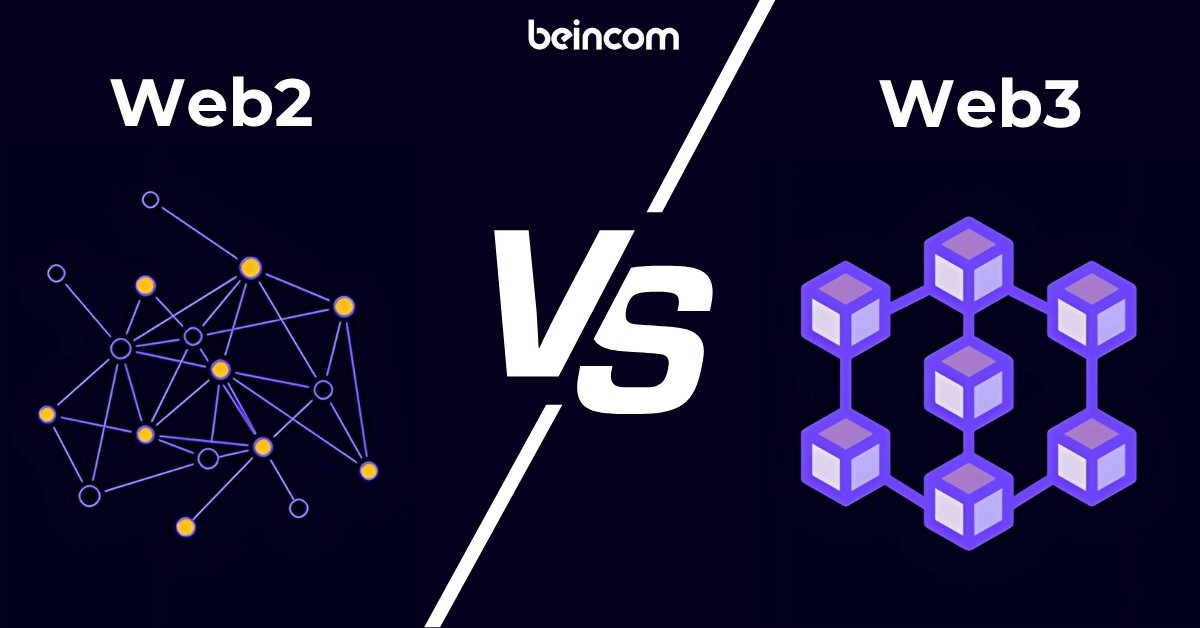
The internet is constantly evolving — and with each phase, it changes the way we live, work, and connect. You’ve probably heard the terms “Web2” and “Web3” tossed around, often in conversations about decentralization, blockchain, or the future of the internet. But what do they really mean? And more importantly, how do Web2 vs Web3 differ?
Let’s dive in!
What is Web2?
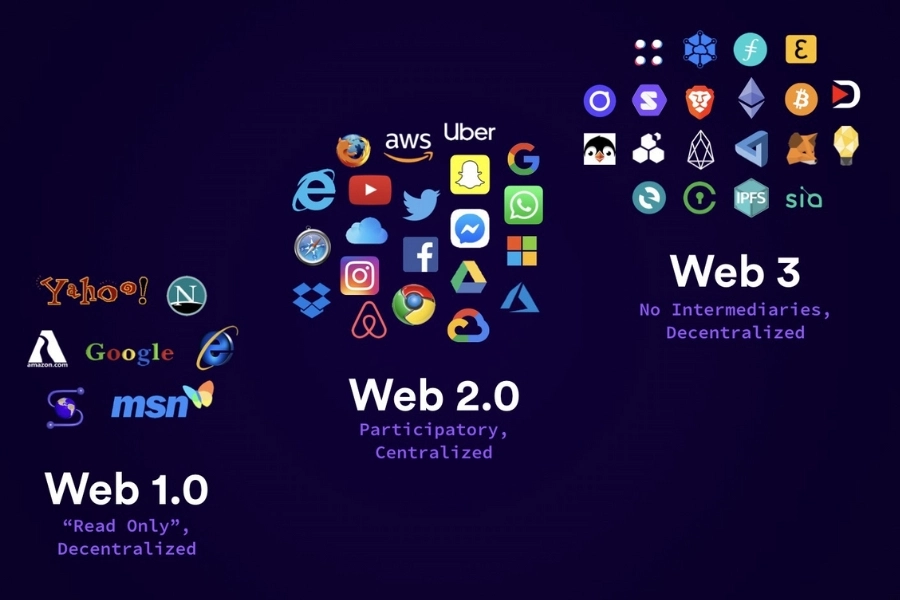
Web2 refers to the second generation of the internet, the version most of us are familiar with today. It emerged in the early 2000s and marked a major shift from static web pages (Web1) to dynamic, user-generated content and interactive platforms.
Unlike Web1, where users could only read information, Web2 allowed people to create, share, and interact with content. Social media platforms like Facebook, Twitter, and YouTube became central to how we communicate online. E-commerce giants like Amazon and service platforms like Uber also grew out of this era.
Key Features of Web2:
- User-Generated Content: Blogs, videos, tweets, and posts made by users fuel the web.
- Centralized Platforms: A handful of tech companies host and control the platforms.
- Data as a Commodity: Users often trade privacy for free access to services.
- Interactivity: Commenting, sharing, liking, and real-time engagement became the norm.
- Mobile-First: The smartphone revolution pushed Web2 to become more portable and accessible.
Web2 made the internet social, mobile, and incredibly convenient—but it also led to growing concerns about data privacy, censorship, and platform monopolies. These are the problems that Web3 aims to solve.
What is Web3?
Web3 is the next phase in the evolution of the internet — a decentralized, user-owned web powered by blockchain technology. While Web2 made the internet social and interactive, Web3 takes it further by giving users control over their data, identity, and digital assets.
Instead of relying on centralized platforms, Web3 applications (often called dApps) run on peer-to-peer networks like Ethereum or Solana. These platforms are governed by code and communities, not corporations. At the core of Web3 are ideas like decentralization, transparency, and user empowerment.
Key Features of Web3:
- Decentralization: No single company controls the platform or data.
- Blockchain-Based Infrastructure: Immutable ledgers verify transactions and ownership.
- User Ownership: Users control their data, identities, and assets through wallets.
- Token Economies: Cryptocurrencies and NFTs allow users to earn, trade, and govern.
- Open Source and Permissionless: Anyone can participate or build without gatekeepers.
Web3 promises a more democratic internet — where value flows directly between users and creators, not through centralized middlemen. It’s still early and evolving, but its potential is already reshaping how we think about online interaction, finance, and identity.
To fully understand key technologies of Web3, check out this article: What is Web3? Understand Next Evolution of the Internet
Web2 vs Web3: Key Differences
Understanding the difference between Web2 and Web3 comes down to who controls the data, how applications are built, and how value is created and shared. Here’s a detailed comparison:
| Aspect | Web2 | Web3 |
| Ownership | Platforms own user data and content | Users own data, identities, and assets via wallets |
| Infrastructure | Centralized servers and cloud providers | Decentralized networks and blockchain-based infrastructure |
| Data Control | Controlled by companies, often monetized for ads | Controlled by users, stored securely and transparently |
| Speed | Generally fast and scalable due to centralized systems | Slower due to decentralization, but improving rapidly |
| Monetization | Ad-driven, value captured by platforms | Token-driven, value shared with users and creators |
| Currency | Traditional fiat or in-app payments | Cryptocurrencies and tokens (e.g., ETH, USDT, BIC) |
| Identity | Platform-specific logins (e.g., Google, Facebook) | Self-sovereign identity (e.g., ENS, wallet-based login) |
| Governance | Company-controlled decision-making | Community-led governance through DAOs and token voting |
| Access | Permissioned — users need accounts on each platform | Permissionless — anyone can join, use, or build |
| Censorship | Platforms can ban, remove, or censor content | Resistant to censorship, with content stored on-chain |
In short, Web2 is platform-centric, while Web3 is user-centric. Web3 introduces a shift in power—from corporations to communities, and from closed systems to open ecosystems.
The Philosophy Behind Web2 vs Web3
While Web2 vs Web3 differ in their technologies, what truly sets them apart is their underlying philosophy.
Web2 was built for convenience and growth. It focused on connecting people, scaling platforms, and creating new business models through data. Users were given free access to powerful tools, but in return, they surrendered ownership and privacy. Corporations held the keys to identity, content, and even online reputation.
Web3, on the other hand, is a response to those trade-offs. It’s driven by ideals like decentralization, transparency, and user empowerment. It asks: What if the internet was no longer owned by a handful of tech giants? What if you truly owned your data, identity, and contributions online?
This ideological shift is fundamental — it’s not just a new version of the web, it’s a new relationship between users, platforms, and value.
Web2 vs Web3: A Shift in Architecture and Technology
While the surface experience may look similar — websites, apps, content feeds — the underlying technology of Web2 and Web3 is fundamentally different. Web2 runs on centralized servers, with user data and logic controlled by platform providers.
In contrast, Web3 is built on decentralized networks where applications run via smart contracts, data lives on public ledgers or distributed storage (like IPFS), and users interact through cryptographic wallets.
This shift from centralized infrastructure to permissionless, open protocols doesn’t just change where the data lives — it redefines ownership, trust, and participation across the internet.
Read more: DeFi Smart Contracts: How They Work & Why They Matter
From User to Product vs User as Owner
In Web2, a popular saying goes: “If you’re not paying for the product, you are the product.” Most of today’s major platforms—social networks, search engines, even news sites—rely on user data to power targeted ads and algorithmic content. Your behavior, preferences, and time become the currency, monetized without direct return to you.
Web3 flips this model.
In Web3, users are not just participants—they’re stakeholders. They own tokens, contribute to protocols, and earn rewards for their activity. Instead of giving data away for free, users can choose how and when to share, and with whom. They can vote on platform changes, earn revenue from their content, or even co-own the platform itself.
This shift transforms passive users into active contributors. Ownership is no longer limited to investors or insiders—it’s opened up to anyone who engages meaningfully.
Trust in Platforms vs Trust in Code
In Web2, users are asked to trust centralized platforms to manage their data, protect their privacy, and act in good faith. But history tells us that trust is often misplaced. From the Cambridge Analytica scandal to massive data leaks and algorithm manipulation, centralized systems have repeatedly breached user confidence.
Web3 introduces a new paradigm: don’t trust—verify.
Instead of trusting companies, users rely on transparent, open-source code, smart contracts, and community governance. Rules are encoded in protocols and enforced automatically, not decided behind closed doors. Anyone can audit the code, track transactions on public blockchains, and participate in decision-making through DAOs.
This shift doesn’t just change the technology—it changes the mindset. In Web3, trust is replaced by transparency, and power moves from institutions to individuals.
Curious about how social networking is evolving in the Web3 era? Check out: Blockchain Social Media: What It Is and 5 Best Platforms
Closed Ecosystems vs Open Protocols
Web2 platforms thrive on walled gardens. Each service operates as its own closed ecosystem—Instagram doesn’t talk to X (formerly Twitter), Facebook doesn’t integrate your TikTok data, and your identity is locked into each platform’s silo. Even developers face restrictions when trying to build on top of these platforms due to APIs that can be changed, limited, or shut down at any time.
Web3 flips this model.
At the core of Web3 is a belief in interoperability and composability. Platforms are built on open protocols like Ethereum, where any developer can create apps without permission. Data is user-owned and portable—your wallet, identity, and assets follow you from one dApp to another. Services are designed to stack like Lego bricks, creating an ecosystem that’s modular and collaborative rather than competitive and restrictive.
This openness unlocks faster innovation and puts control in the hands of users, creators, and developers—not corporations.
What This Means for You
The Web2 to Web3 shift isn’t just about technology — it’s about how you engage with the internet and how much control you actually have.
- As a creator, you’re no longer bound by platforms that take a cut of your work or can shut down your account overnight. With Web3 tools, you can monetize directly through NFTs, tokens, and decentralized platforms — owning your content, community, and revenue stream.
- As a user, your identity isn’t just another login — it’s yours. With Web3 wallets and decentralized identities, you control your data, choose what to share, and carry your digital reputation across platforms.
- As a developer, you no longer need permission or API keys to build something meaningful. Web3 protocols are open by default — allowing innovation to flourish without gatekeepers. Want to build on Ethereum, use IPFS for storage, or tap into decentralized identity tools? You can — no approval needed.
Web3 shifts power from platforms to people. It gives individuals a real stake in the networks they use — as users, builders, and owners.
It’s Not Either/Or (Yet)
While Web3 offers a compelling vision of a more open, user-owned internet, Web2 isn’t disappearing overnight. In fact, many Web3 applications still depend on Web2 infrastructure in some way — whether it’s using cloud hosting, centralized logins, or frontend interfaces.
Take wallets, for example. Many people access Web3 apps through browser extensions like MetaMask — a tool still dependent on traditional browsers and app stores. Or think about NFT marketplaces: they often rely on centralized servers for images, even when ownership is recorded on-chain.
At the same time, Web2 has real strengths: speed, scalability, and a user experience that billions are already familiar with. That’s why the near-term future is likely a hybrid — blending the convenience and reach of Web2 with the transparency and ownership principles of Web3.
So instead of choosing one over the other, the real opportunity is to combine the best of both worlds — building tools that feel familiar but work in fundamentally better ways.
Experience the Shift with Beincom
If the leap from Web2 to Web3 feels overwhelming, Beincom is built to bridge that gap.
Beincom is a SocialFi platform that combines the ease and familiarity of Web2 experiences — like messaging, commenting, social feeds, and user-friendly interface — with the empowering features of Web3: on-chain identity, token incentives, NFT integration, and true ownership.
You don’t need to be a crypto expert to join. From seamless onboarding to integrated BIC Wallet, Beincom lets you explore Web3 without friction.
Whether you’re a creator looking to monetize directly, a community builder seeking transparency, or just someone tired of being the product — Beincom is your gateway to the next evolution of the internet.
Explore Beincom and experience Web3 — the way it should feel.
FAQs: Web2 vs Web3
Q1. What’s the difference between Web1 vs Web2 vs Web3?
- Web1 (1990s–early 2000s): Read-only. Static websites where users could only consume information.
- Web2 (mid-2000s–present): Read-write. Interactive platforms like Facebook, YouTube, and Instagram, where users create and share content—but platforms control the data.
- Web3 (emerging): Read-write-own. Users control their data, assets, and identity using blockchain, smart contracts, and decentralized protocols.
Q2. Will Web3 replace Web2 entirely?
Not anytime soon. While Web3 is growing rapidly, Web2 still powers most of the internet. In the near future, we’ll likely see a hybrid model where both coexist.
Q3. Is Web3 more secure than Web2?
Web3 offers greater transparency and control, but it’s not immune to risks like scams or smart contract bugs. Security still depends on how the tools are used.
Q4. What is a Web3 wallet and why do I need one?
A Web3 wallet (like BIC Wallet or MetaMask) stores your digital assets and lets you interact with decentralized applications. It’s your identity and key in the Web3 world.
Q5. What is SocialFi and how does it relate to Web3?
SocialFi combines social media with decentralized finance. It’s a Web3-powered model where users can earn from content, engagement, and reputation — instead of giving away value to platforms.