In the crypto world, not all tokens are created equal. While many digital assets rely purely on speculation, utility tokens have real use cases that drive value through adoption and activity — not just hype. These tokens power blockchain ecosystems by serving as the “fuel” for transactions, governance, access, or rewards.
As investors become more focused on long-term sustainability, utility tokens are gaining attention for their practical role in the Web3 economy. They represent the foundation of decentralized services, from file storage and AI computation to advertising and content monetization. In this guide, we’ll explain what utility tokens are, how to evaluate them, and highlight some of the best utility tokens to buy in 2025 for real-world utility and growth potential.
What Is a Utility Token?
A utility token is a type of cryptocurrency designed to serve a specific function within a blockchain ecosystem. Unlike coins such as Bitcoin or Ethereum, which act primarily as currencies or stores of value, utility tokens provide access to products, services, or special privileges within their native platforms. In other words, owning a utility token lets users “use” the ecosystem rather than simply invest in it.
For example, a utility token might be used to pay for network fees, stake for rewards, vote in governance decisions, or unlock premium features. This functional purpose ties its value directly to the activity and adoption of the underlying project. When the platform grows and usage increases, the demand for its utility token usually follows — giving it intrinsic, rather than purely speculative, value.
Utility tokens are at the core of Web3’s real-world use cases. They fuel decentralized networks for data storage, GPU computation, gaming, AI, and social engagement. Unlike governance tokens, which exist mostly for decision-making, or meme tokens, which rely on community sentiment, utility tokens gain value through use, making them a key indicator of genuine ecosystem health and user adoption.

Read more: What Are Social Tokens and How Do They Work?
How to Evaluate a Utility Token
Before deciding which are the best utility tokens to buy, it’s essential to know how to evaluate them properly. Not every project that claims to have “utility” actually does — some tokens exist only for speculation, while others have real demand driven by platform activity. Here’s how to tell the difference.
Real Utility and Adoption
A true utility token should serve a tangible purpose. Ask yourself: does this token enable access, payments, or participation within a functioning ecosystem? For instance, Filecoin (FIL) powers decentralized storage, while Basic Attention Token (BAT) fuels the Brave Browser’s ad economy. Tokens tied to actual products and active user bases tend to hold stronger long-term potential.
Tokenomics and Supply Design
Sound tokenomics are critical for sustainability. Check whether the project has a capped supply, deflationary mechanics (like burns), or inflationary emissions. Understand how tokens are distributed — if a small group controls most of the supply, that’s a red flag. Well-balanced designs encourage holding and real usage instead of quick speculation.
Network and Ecosystem Strength
A strong ecosystem signals lasting demand. Projects with robust developer activity, active partnerships, and real integrations show that the token’s utility extends beyond hype. The more applications that use or require the token, the stronger its foundation.
Community and Governance
Community engagement matters because it drives both network effects and transparency. Look for tokens tied to ecosystems with active governance, frequent updates, and open communication. A passionate community often reflects real user adoption — not just marketing noise.
Accessibility and Liquidity
Finally, evaluate how easy it is to buy, sell, and use the token. Leading utility tokens are usually listed on major exchanges, integrated across wallets, and supported by dApps or partner networks. Liquidity ensures you can enter and exit positions without major slippage.
When you combine all these factors — utility, tokenomics, ecosystem, community, and liquidity — you can better identify which utility tokens have genuine staying power.
Top Utility Tokens to Buy in 2025
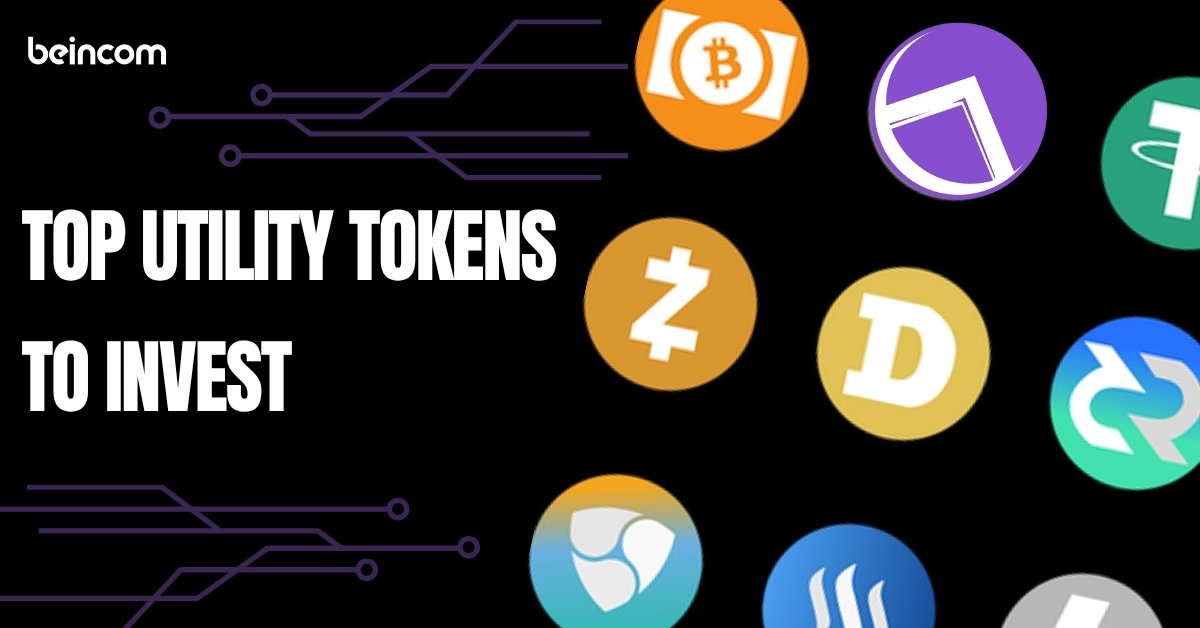
The best utility tokens are those that power thriving ecosystems with real user demand and proven functionality. These tokens go beyond speculation — they act as the backbone of Web3 platforms that people actually use. Below are some of the most promising and fundamentally strong utility tokens to watch in 2025.
Binance Coin (BNB) – Powering the Binance Ecosystem
BNB remains one of the strongest utility tokens in crypto, with real demand across multiple use cases. Originally launched to reduce trading fees on Binance, BNB now fuels a massive ecosystem that includes Binance Smart Chain (BNB Chain), staking, NFT trading, DeFi protocols, and payment solutions.
Holders can use BNB for transaction fees, token sales, and ecosystem applications, while periodic token burns help manage supply and maintain value. With over 100 million users across Binance’s platforms, BNB’s utility and network effects make it a long-term pillar of the crypto economy.
Filecoin (FIL) – Decentralized Storage Network
Filecoin (FIL) is the native token of the Filecoin network, which allows users to rent out spare storage capacity or buy decentralized cloud storage. It’s one of the earliest and most successful examples of a token tied directly to real-world infrastructure.
FIL is used for payments between users and storage providers, collateral for service reliability, and network governance. As demand for decentralized data storage grows — particularly for Web3 apps and AI data models — Filecoin’s utility and adoption are expected to rise accordingly.
Chainlink (LINK) – Powering Smart Contract Data Feeds
Chainlink (LINK) is one of the most essential utility tokens in the blockchain industry. It powers the Chainlink Oracle Network, which connects smart contracts to real-world data, APIs, and off-chain systems. LINK is used to pay node operators for providing accurate data, ensuring reliability across thousands of DeFi and enterprise integrations.
As more blockchains, financial systems, and AI platforms rely on real-time data, Chainlink’s role — and the utility of its token — will only strengthen. LINK is often considered a “blue-chip utility token” for its indispensable role in Web3 infrastructure.
These five tokens — BNB, FIL, RNDR, BAT, and LINK — stand out for one reason: they power ecosystems with tangible demand. Each has a proven utility model, large user base, and active development, making them among the best utility tokens to buy in 2025 for those seeking real use cases and long-term potential.

Render (RNDR) – GPU Power for the AI Era
Render (RNDR) is a decentralized GPU rendering network that connects creators and developers with unused GPU power around the world. The RNDR token is used to pay for computing tasks such as 3D rendering, visual effects, and increasingly, AI model processing.
As AI and metaverse development expand, GPU demand continues to skyrocket. Render’s ability to tokenize compute power — a scarce digital resource — gives RNDR one of the clearest real-world utilities among crypto tokens today.
Basic Attention Token (BAT) – Tokenizing Digital Attention
Basic Attention Token (BAT) powers the Brave browser, a privacy-first platform that rewards users for viewing ads and helps advertisers target audiences more efficiently. Users earn BAT for opting into ads, while advertisers pay BAT to run campaigns.
This creates a self-sustaining ecosystem that values user attention — a revolutionary idea in digital marketing. With over 60 million monthly active Brave users, BAT has proven adoption and continues to show how utility tokens can redefine Web2 industries through blockchain.
BIC Token (BIC) – Powering the Beincom SocialFi Ecosystem
BIC Token is the native utility token of Beincom, a Web3-powered SocialFi platform that blends social networking, community building, and decentralized ownership. Within the Beincom ecosystem, BIC serves multiple real-world functions — from accessing premium social features to participating in governance, trading NFTs, and supporting creators through the platform’s Donate feature.
Unlike many speculative assets, BIC Token has direct in-app utility. Users earn and spend BIC through missions, engagement rewards, NFT trading, and staking-based features. Its integration with the BIC Wallet — Beincom’s non-custodial wallet — ensures seamless, gas-efficient transactions across Web3 activities.
As Beincom expands its ecosystem with new features like the Airdrop program, NFT marketplace, and community-driven governance, BIC Token stands out as one of the few social-focused utility tokens that combines usability, rewards, and long-term ecosystem value in the growing SocialFi space.

New to Beincom Project? Learn more at: What is BIC Token? All About Beincom Project
Risks and Pitfalls of Utility Token Investing
While utility tokens offer tangible use cases and long-term potential, they’re not risk-free. Understanding the challenges that come with investing in these tokens can help you make smarter, more sustainable decisions in a volatile market.
Overstated or Unrealized Utility
Many projects advertise “real-world use cases” but fail to deliver meaningful adoption. A token might have great technology, yet if the platform lacks active users or partners, its so-called utility remains theoretical. Always verify actual product usage — not just whitepaper promises.
Dependence on Platform Success
The value of a utility token depends entirely on the success of its underlying ecosystem. If the project loses users, faces competition, or fails to innovate, demand for the token quickly dries up. Unlike Bitcoin or Ethereum, these tokens rarely hold value outside their networks.
Market Volatility
Even tokens with strong fundamentals aren’t immune to crypto’s extreme volatility. Utility demand can stabilize price movements slightly, but speculative trading still drives much of the market. Long-term investors should focus on adoption metrics, not short-term pumps.
Regulatory Uncertainty
Regulation is still catching up to Web3. Some countries have unclear frameworks for classifying utility tokens, especially when they involve governance or profit-sharing features. Regulatory changes could impact listings, liquidity, or even the legality of holding certain assets.
Token Inflation or Poor Design
Projects with unlimited token supply or constant emissions often struggle to sustain token value. Without deflationary mechanisms, buyback programs, or consistent token sinks, even a useful project can suffer from price dilution over time.
A good rule of thumb: invest in tokens tied to platforms you actually use or believe in. Real adoption is the strongest defense against market hype and speculation.
How to Buy and Store Utility Tokens Safely
Once you’ve identified the best utility tokens to buy, the next step is making sure you purchase and store them securely. The crypto market is full of opportunities — but also scams, phishing attacks, and technical pitfalls. Here’s how to stay safe while managing your investments.
Use Reputable Exchanges
Always buy tokens from trusted exchanges such as Binance, Coinbase, or OKX. These platforms offer verified listings, transparent liquidity, and advanced security protocols. Avoid unverified or decentralized exchanges that list unknown tokens without proper audits — they often carry higher risks of fraud or rug pulls.
Verify Contract Addresses
When buying newer utility tokens, double-check their official smart contract addresses from verified project websites or CoinMarketCap. Fake tokens with similar names are common phishing traps designed to trick buyers.
Diversify Your Holdings
Don’t put all your capital into one project, even if its utility looks strong. Diversifying across multiple tokens and sectors (DeFi, AI, gaming, SocialFi, etc.) helps reduce risk and protect your portfolio against ecosystem-specific failures.
Store in Secure Wallets
After purchasing, transfer your tokens to a non-custodial wallet such as MetaMask, Trust Wallet, or BIC Wallet — Beincom’s multi-chain Web3 wallet designed for both accessibility and safety. Using secure wallets ensures that you maintain full control of your private keys and assets, unlike centralized exchanges that can freeze or lose funds.
Learn more tips to protect your digital assets here: Private Key Best Practices: How to Keep Your Crypto Safe
Be Cautious with Airdrops and New Listings
Many scams disguise themselves as “airdrops” or “exclusive token sales.” Always verify official sources and never connect your wallet to suspicious websites. Use social channels or the project’s main site to confirm authenticity before participating.
By following these best practices, you can safely build exposure to high-potential utility tokens while keeping your assets secure. Crypto rewards those who take smart risks — not careless ones.
Learn more: What Are Governance Tokens and How Does They Work
FAQs
Q1. What exactly is a utility token?
A utility token is a type of cryptocurrency that gives users access to specific products or services within a blockchain ecosystem. Unlike coins such as Bitcoin, which are primarily used for payments or value storage, utility tokens are designed for functionality — like paying fees, accessing dApps, or participating in governance.
Q2. Are utility tokens good long-term investments?
It depends on the project’s real-world adoption. Tokens that power active platforms (like BNB for Binance or BAT for Brave) tend to hold more sustainable value than speculative assets. If the underlying ecosystem keeps growing, the token’s demand and price often follow.
Q3. How are utility tokens different from governance tokens?
Utility tokens focus on usability — they’re used to pay for services or unlock platform features. Governance tokens, on the other hand, let holders vote on project decisions. Some tokens combine both roles, but true utility tokens derive most of their value from network usage, not governance rights.
Q4. Where can I buy utility tokens?
You can buy most major utility tokens on centralized exchanges like Binance, Coinbase, and Kraken, or on decentralized exchanges like Uniswap. Always make sure you’re buying from a verified source with strong liquidity and official contract addresses.
Q5. How do I store utility tokens safely?
Use a non-custodial wallet such as BIC Wallet, MetaMask, or Trust Wallet. These wallets give you full control of your private keys and work across multiple chains. For long-term storage, consider using a hardware wallet like Ledger or Trezor for maximum security.
Q6. Can utility tokens lose their value?
Yes — if the project fails to maintain adoption or if its ecosystem becomes inactive. Since utility tokens rely on usage demand, they’re only as strong as the platform they support. Always evaluate active user metrics, developer activity, and community strength before investing.