If you’ve spent any time in the crypto world, you’ve probably heard people talking about hard forks and soft forks — and maybe felt a little lost. Don’t worry, you’re not alone!
A fork happens when a blockchain changes its rules. Sometimes it’s a small tweak, sometimes it’s a big split that creates an entirely new cryptocurrency. Knowing the difference between soft and hard forks can save you from confusion and even help you make smarter crypto moves.
In this article, we’ll break down what forks are, what the difference is between hard fork vs soft fork, and why they actually matter — all in a simple, easy-to-understand way.
What is a Blockchain Fork?
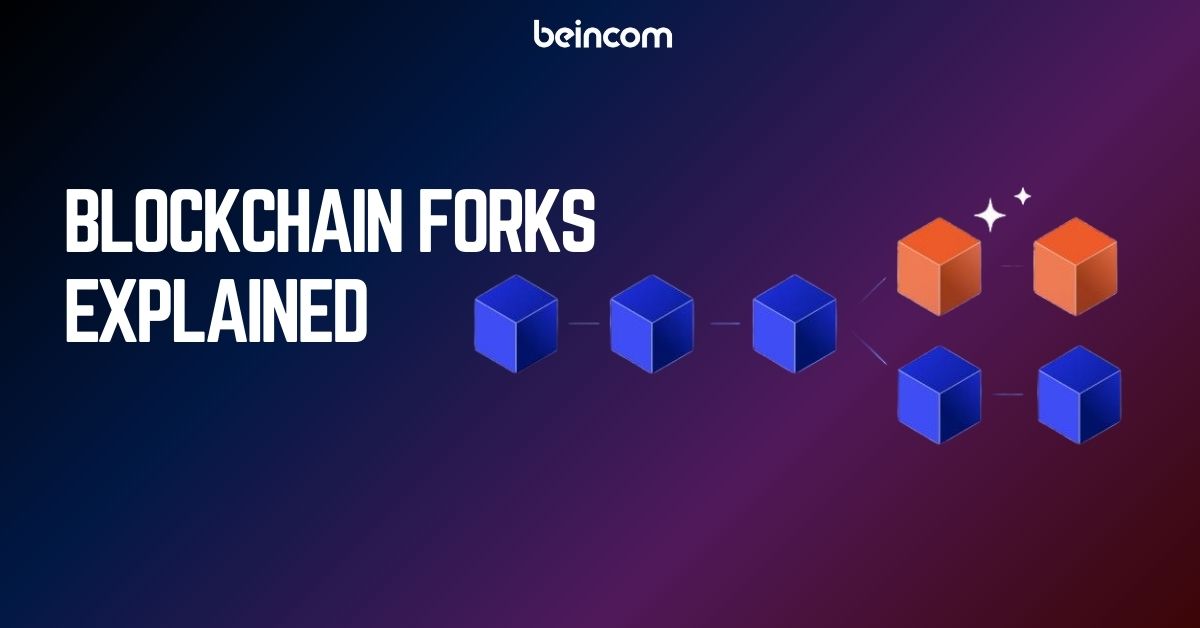
In simple terms, a fork in blockchain happens when the network’s rules — the protocol that all participants follow — get updated or changed. Think of it like a “choose-your-own-adventure” book: at some point, the story can take a different path depending on which rules you follow.
Forks happen for several reasons:
- Upgrades and new features: Developers might want to improve the blockchain, add new functionality, or make it faster.
- Bug fixes and security patches: Sometimes a fork is necessary to fix vulnerabilities or prevent attacks.
- Community decisions or disagreements: In decentralized networks, the community may disagree on the direction of the blockchain, leading to a fork.
When a fork occurs, there are two possibilities:
- Soft Fork – a minor update that is compatible with older rules.
- Hard Fork – a major update that is not compatible and can create a split in the blockchain.
Forks are a natural part of blockchain evolution. They allow networks to adapt, grow, and sometimes even spark entirely new cryptocurrencies.
Read more: Proof of Work vs Proof of Stake: Which Are The Differences?
Soft Fork — Minor, Backwards-Compatible Updates
A soft fork is a type of blockchain upgrade that remains compatible with the previous rules. Even if some participants don’t update their software immediately, the network can continue operating smoothly. In other words, a soft fork tightens or refines the existing rules without breaking older versions of the protocol.
How a Soft Fork Works
A soft fork typically introduces more restrictive rules. Because these new rules still fit within the boundaries of the old ones, nodes that haven’t upgraded can still validate blocks and transactions. This makes a soft fork relatively easy to implement across a decentralized network.
For most users, soft forks are low-risk and cause minimal disruption. The blockchain continues as a single chain, and no new cryptocurrency is created.
Why Blockchains Use Soft Forks
Soft forks are commonly used for:
- Minor protocol adjustments
- Efficiency improvements
- Security enhancements
- Feature upgrades that don’t require a complete rule overhaul
Because they maintain compatibility, soft forks help the network evolve without forcing every participant to upgrade at once.
Example: SegWit on Bitcoin
A well-known example of a soft fork is Segregated Witness (SegWit) on the Bitcoin network. SegWit changed how signature data is stored within transactions, resulting in:
- Reduced transaction size
- Faster processing
- Lower fees
- Improved scalability
Nodes that did not immediately upgrade could still recognize SegWit transactions, allowing a smooth transition without splitting the chain.
A soft fork allows a blockchain to adopt new rules or improvements while keeping the network unified and compatible. It’s the preferred method for updates that don’t require major structural changes.
Hard Fork — Major, Non-Compatible Changes
A hard fork is a significant upgrade to a blockchain’s protocol that is not compatible with older versions of the software. Once the new rules are introduced, nodes that do not upgrade can no longer validate blocks or interact with the updated chain. This creates a permanent divergence from the original blockchain.
Unlike a soft fork, a hard fork often results in 2 separate chains:
- One following the old rules
- One following the new rules
If both chains continue to receive support from users and miners, each can evolve into an independent network with its own cryptocurrency.
How a Hard Fork Works
When developers or the community decide to implement a hard fork, they introduce new rules that fundamentally alter how the blockchain operates. These changes may include:
- Adjusting block size limits
- Reversing transactions after a major exploit
- Changing consensus rules
- Introducing major new features or architecture upgrades
Because these changes break compatibility with older nodes, every participant must upgrade their software to stay on the new chain. Those who do not update remain on the old chain, which creates a split.
Why Hard Forks Happen
Hard forks occur for several reasons, including:
- Implementing large-scale upgrades that cannot be achieved through a soft fork
- Fixing critical vulnerabilities or reversing damage after a hack
- Resolving deep community disagreements about the direction of the blockchain
- Launching new features or structural changes that old nodes cannot support
In decentralized networks, a hard fork can be both a technical and social event. It often reflects differences in vision within the community.
Real Examples of Hard Forks
Bitcoin → Bitcoin Cash
In 2017, the Bitcoin community debated how to scale the network. One group supported increasing the block size to allow more transactions per block, while others preferred different solutions. The disagreement led to a hard fork, resulting in the creation of Bitcoin Cash, a separate blockchain with larger block sizes.
Ethereum → Ethereum Classic
After the DAO hack in 2016, Ethereum developers proposed reversing the impact of the exploit to protect users’ funds. While most of the community supported this solution, a minority believed the blockchain should remain immutable. This split created two chains:
- Ethereum (ETH) with the reversal
- Ethereum Classic (ETC) following the original chain
Both blockchains continue to operate today.
A hard fork represents a major, incompatible change to a blockchain’s rules. It can lead to a permanent split, resulting in two distinct chains and potentially two separate cryptocurrencies. Hard forks are essential for large upgrades but also highlight the importance of community consensus in decentralized systems.

Hard Fork vs Soft Fork: What Is The Difference
| Category | Hard Fork | Soft Fork |
| Definition | A permanent split in the blockchain where new rules are not compatible with the old ones. Nodes must upgrade to stay on the main chain. | A blockchain upgrade that is backward-compatible. Old nodes can still validate blocks following the new rules. |
| Compatibility | Not compatible with older versions. | Compatible with older versions. |
| Network Outcome | Can create two separate blockchains if not everyone upgrades. | The chain stays unified as long as the majority follows the new rules. |
| Upgrade Requirement | Mandatory for anyone who wants to stay on the new chain. | Optional, but miners/nodes are encouraged to update. |
| Consensus Impact | High. A split in consensus can lead to two coins and two communities. | Moderate. Consensus remains intact if most miners adopt the update. |
| Examples | Bitcoin Cash splitting from Bitcoin; Ethereum and Ethereum Classic. | SegWit on Bitcoin; Taproot upgrade on Bitcoin. |
| Risk Level | Higher — fragmentation, confusion for users, and duplicate coins. | Lower — less disruptive and easier to adopt. |
| Use Cases | Major rule changes: block size increases, reversing hacks, altering core logic. | Smaller, incremental improvements: efficiency upgrades, added features without breaking old rules. |
| Community Coordination | Requires broad agreement and planning. | Easier to coordinate due to backward compatibility. |
Why Forks Matter for Users & Investors
Forks are more than technical upgrades. They can directly impact your assets, how you use your crypto wallet, and the value of the networks you follow. Whether you’re a casual user or an active investor, understanding how forks work helps you avoid surprises and spot new opportunities.
How Forks Affect Your Holdings and Wallets
When a hard fork creates a new blockchain, users who hold assets on the original chain may suddenly own coins on two networks. This happens because both chains share the same transaction history before the split.
However, whether you can access those new tokens depends on your wallet provider and how quickly they support the fork.
With soft forks, no new coins are created. Your assets stay exactly where they are, and your wallet continues working as usual. The upgrade simply makes the network more secure or efficient without affecting balances.
How Exchanges Handle Forks
Exchanges typically pause deposits and withdrawals during major forks to prevent replay attacks or chain confusion. After the fork:
- They may support both chains.
- They may support only the chain that gains the strongest community consensus.
- They may distribute new coins to users if a hard fork results in a new asset.
Each exchange has its own policy, which is why announcements before major forks are important to follow.
Why Users Should Stay Informed
Forks can influence:
- Network reliability
- Security
- Transaction fees
- Token value
- Long-term viability of a blockchain
Being aware of upcoming or proposed forks helps users understand potential risks and prepare accordingly. Investors especially benefit from monitoring community sentiment, since forks often reflect deeper disagreements about a network’s future.
Conclusion — The Role of Forks in Blockchain Evolution
Hard forks and soft forks represent 2 paths for upgrading a blockchain, each serving a different purpose. Hard forks introduce major rule changes that may split a chain, while soft forks offer backward-compatible improvements that keep the network unified.
Despite their differences, both types of forks play a vital role in blockchain evolution. They allow communities to update outdated rules, enhance security, experiment with new ideas, and govern the direction of the network in a decentralized way.
For users and investors, understanding forks is essential. It helps you protect your assets, interpret market reactions, and make informed decisions as the technology continues to shift. Blockchain is built on innovation, and forks are one of the key mechanisms that keep the ecosystem moving forward.
Learn more: What Is Impermanent Loss? How to Calculate and Minimize It
FAQs
Q1. What is a blockchain fork?
A blockchain fork is a change to a network’s rules. When a fork happens, the blockchain either upgrades while staying backwards-compatible (soft fork) or splits into two separate chains with different rules (hard fork).
Q2. Do hard forks create new cryptocurrencies?
Yes. Hard forks can result in a new cryptocurrency if the network splits. Examples include Bitcoin Cash (from Bitcoin) and Ethereum Classic (from Ethereum).
Q3. Do soft forks create new coins?
No. Soft forks do not create new assets. They update the blockchain without breaking compatibility with older versions.
Will I automatically receive new coins after a hard fork?
It depends on your wallet or exchange. Some platforms support the new asset and credit users accordingly, while others may not. Always check your provider’s announcements during major forks.
Q4. Can forks affect the value of my crypto?
Yes. Forks often impact market sentiment, stability, and demand. A successful fork can strengthen a network, but disagreements leading to splits can cause volatility.
Q5. Are forks risky?
They can be. Hard forks introduce potential chain splits, replay attacks, and confusion over the “main” network. Soft forks are generally safer but still require community coordination to avoid security gaps.
Q6. Why do blockchains need forks?
Blockchains fork to upgrade network rules, improve performance, fix vulnerabilities, or resolve community disagreements. Forks keep decentralized systems adaptable and evolving.
Q7. How can I stay informed about upcoming forks?
Follow project announcements, developer roadmaps, crypto news platforms, and exchange updates. Staying informed helps you protect your assets and prepare for network changes.